.png?width=170&height=44&name=MillerZell_Outline_Black_NO-Tagline_CLEAN-01%20(1).png "Miller Zell")














Prefer listening? Press play above to listen on the go.
This audio is auto-generated. Please let us know if you have feedback.
In our age of inflation, pricing challenges hit retailers and their customers hard. But we’re not going to dwell on that. You’re welcome.
Instead, let’s focus on a challenge that’s complex but solvable, and in many cases more important than price: upgraded, intuitive convenience as a pathway to give customers the value they want.
Customers care about price. They want to save money. But they also want to save time and effort and avoid stress. Maybe even enjoy themselves. Saving $9 at one store on $100 of purchases is nice, but if that savings cost an hour in inconvenience and a downgraded shopping experience — parking, crowds, poor wayfinding, dingy environment, long checkout — then that friction might feel more expensive.
Time, effort and shopping experiences are retail currencies just as real as dollars.
Here are 4 strategic benefits of upgraded, intuitive convenience pathways that bring customer value:
1. Convenience as a battleground for customer loyalty
3. Convenient engagement and engaging convenience
4. Convenience builds trust and then brand loyalty
Convenience as a battleground for customer loyalty
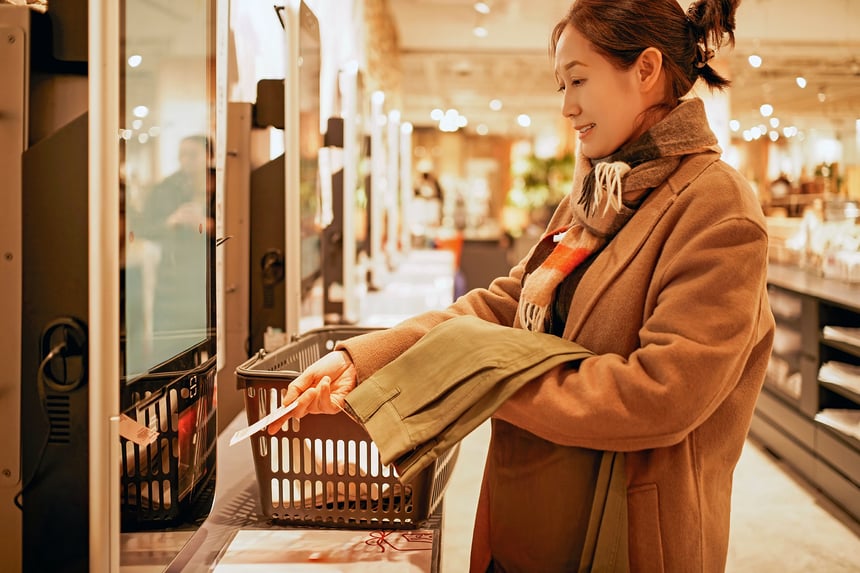
Some forms of retail convenience are table stakes. Home delivery within 24 hours (or less), mobile ordering, curbside pickup/BOPIS and easy return processes are now standard and used by all types and generations of shoppers.
Frictionless shopping that provides immediate gratification is a popular path to purchase for good reasons. Customers want or need something, and they get it as quickly and as easily as possible so they can move on to their next life task.
The value equation here elevates speed, simplicity and certainty over price.
This form of convenience in many ways minimizes in-store interaction and experience. It’s frictionless shopping that stores support for a variety of convenience-first paths to purchase. Whether it’s playing a role in online purchases, BOPIS pickups or goal-driven, in-store wayfinding, these are important inputs for store development.
“Store layouts, adjacencies, signage and technology integrations should reduce cognitive and physical load.”
So, view convenience as a primary store design must-have. Store layouts, adjacencies, signage and technology integrations should reduce cognitive and physical load. Clear sightlines, intuitive wayfinding and logical product groupings are aesthetic and revenue-supporting design decisions. They determine how quickly a customer can achieve their shopping mission.
This is a fundamental part of the customer’s value equation: How much is convenience worth?
Retailers who have invested in frictionless checkout, intelligent wayfinding, optimized adjacencies and seamless omnichannel integration are seeing loyalty metrics improve because customer-time costs went down.
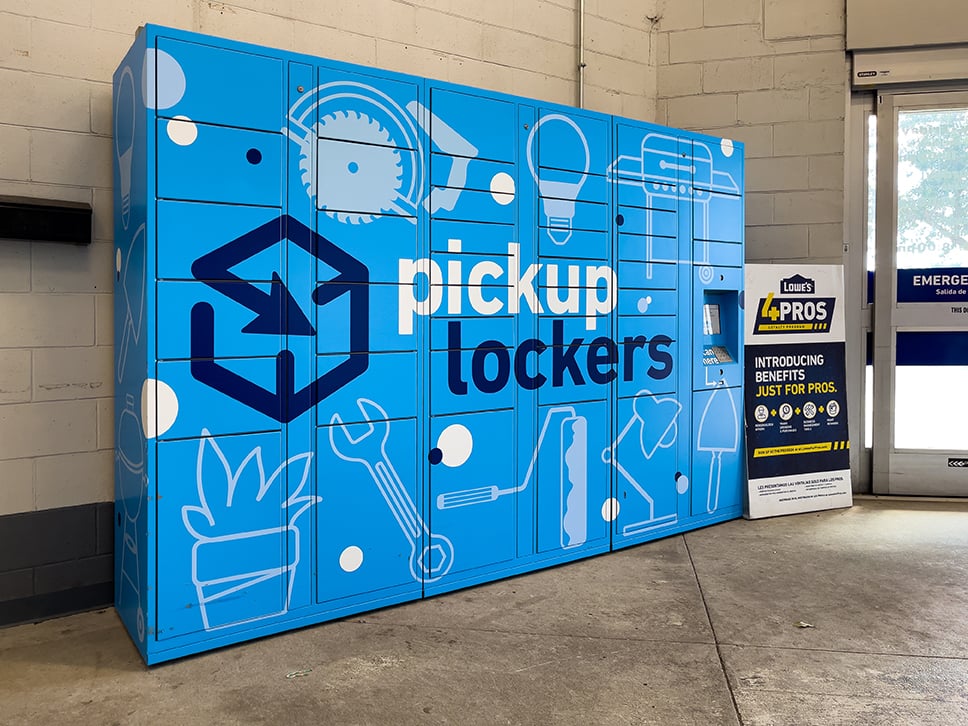
Bold Lowe’s blue branding transforms this Buy Online, Pick Up In Store locker system into a modern customer touchpoint, using clean iconography, oversized graphics and tool-inspired visuals to reflect convenience, innovation and the DIY spirit of the brand. Photo credit: Scott Habermann / stock.adobe.com
Convenience vs. dwell time
Yes, there is a potential retail design tension here: What about dwell time? This perceived goal conflict is mostly due to two-dimensional retail thinking that’s not grounded in strategic, long-term store design solutions.
For example, one of the superficial design strategies to increase dwell time is to place BOPIS lockers or return desks in the back of stores. The idea is you force customers to wander through your stores and therefore increase odds of them making impulse purchases.
No.
If you view customers as a mass to manipulate with inconvenience, you’re going to lose, at least eventually. BOPIS lockers and return desks should be in the front of your stores because that serves customer interests, as all your design initiatives should.
Dwell time does matter, of course. The longer customers shop, the more money they might spend. If your shopping experience is only about convenience, you could diminish the emotional engagement, the community storytelling and the serendipitous product discoveries that make brick-and-mortar stores unique and profitable.
This is why shopping spaces, particularly larger ones, should be based upon store design that serves a variety of customer trip missions.
- Want exacting speed and convenience? Read sign, find product, check out, leave.
- Want speed and convenience and get it, thereby causing stress and urgency to wane and product curiosity to grow? Find what you want quickly so you can casually ponder, say, how a 98-inch, 4K QLED TV seems really, really necessary for your living room.
- Want to casually spend an hour on a Saturday in November and maybe think about your wife’s Christmas present? Look at this glowing display, wander that aisle, ask a question, hit a QR code, download an app and — oh!? — buy that upgraded Bluetooth speaker for your home office.
Store design that serves a variety of trip missions, from urgent to chill and all steps in between, is the design imperative.
Convenient engagement and engaging convenience
Shopping friction is poor wayfinding and difficulty finding specific products. It’s not a Halloween display that makes you stop and laugh. And perhaps make a skeleton purchase on September 29.
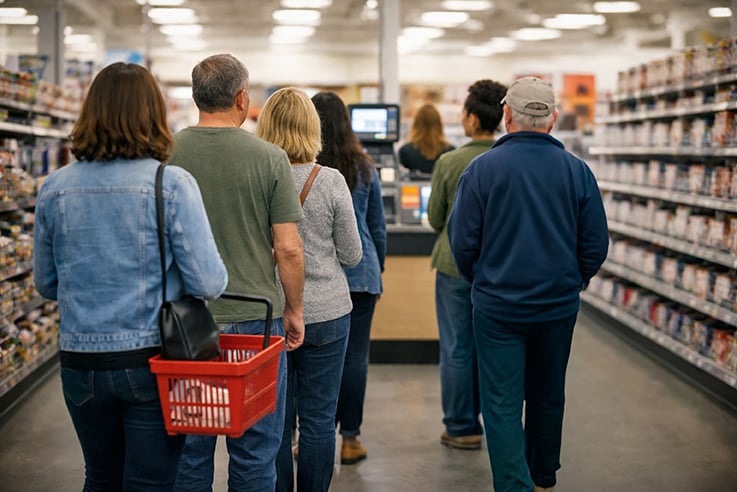
Shopping friction is long self-checkout lines and no staffed cash registers. It’s not an endcap that allows you to pick up and use a massage gun on your aching neck.
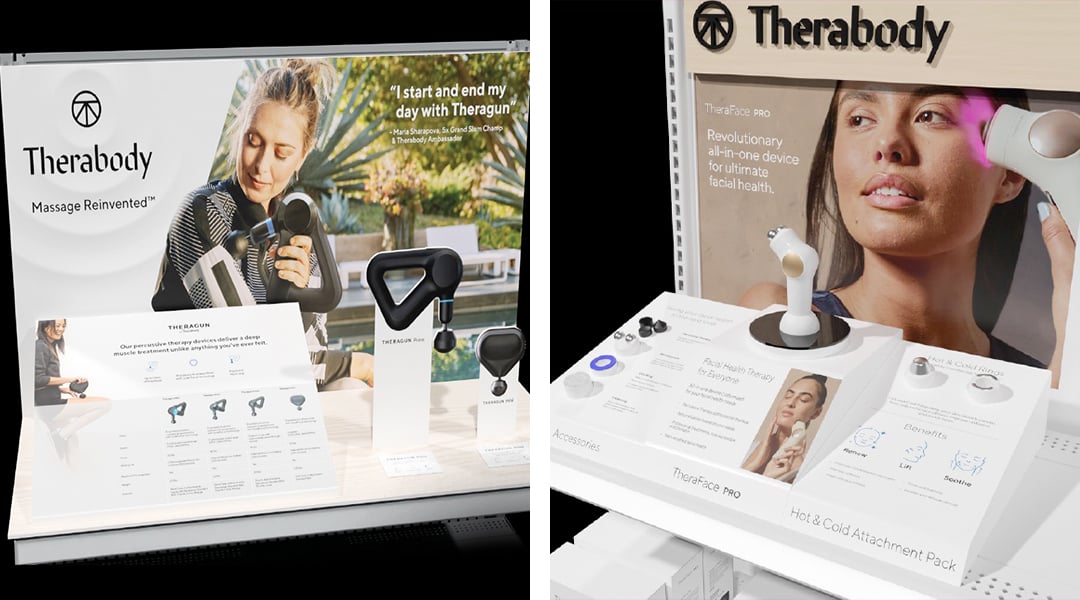
Miller Zell designed and produced end-cap and shelving displays that are compelling and customizable, celebrating a brand and winning new customers. Our in-store visual merchandising design and production execution helped Therabody build relationships with 15 major retailers.
Your branded environments should be optimized for multi-speed use. You enable mission-driven efficiency while creating compelling layers of potential engagement. It’s the customers’ choice, even though you’re definitely trying to influence those choices in ways that increase dwell time and basket size.
High-convenience pathways should exist for customers who know exactly what they want. These include grab-and-go zones, self-checkout, mobile pay and clearly defined “express” journeys. These elements respect the customer’s time and build trust.
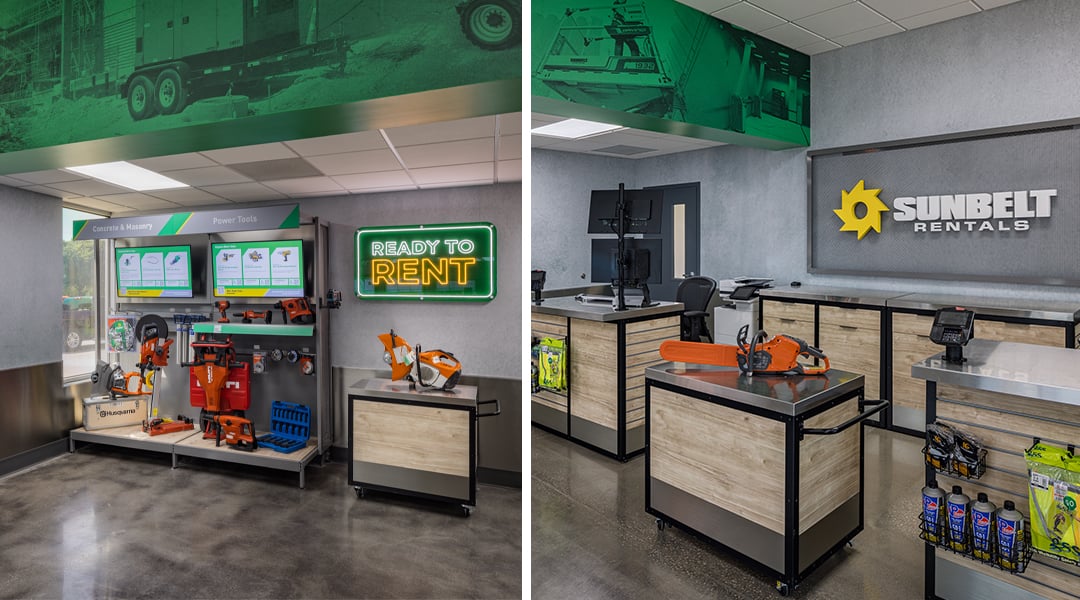
Sunbelt Rental's strategic layout and tool assortment helps renters quickly locate and learn about the options for their project needs. A moveable demo station enables associates to help renters select the best tools while also learning about operation and safety features. A seasonal area provides tool guidance for the most common home and lawn project.
That trust provides a foundation for potential pauses that are strategic retail moments that invite exploration without forcing it. This is where experiential design comes in. Feature zones, storytelling displays, localized assortments and sensory cues can draw customers into deeper engagement. The key is that these elements are opt-in, not obstructive. They should sit adjacent to fast paths, not within them.
“Deploy staff not just to direct and transact, but also to enhance moments where engagement matters, such as product education, upselling and brand storytelling.”
Technology can play a critical role in balancing this equation. Data-driven personalization can suggest relevant products quickly while still encouraging discovery. For example, digital signage or app integrations can guide a customer to their intended purchase while suggesting complementary items based on behavior or context. This merges convenience with incremental engagement rather than treating them as opposing forces.
Store associates should be trained along these lines as well. Deploy staff not just to direct and transact, but also to enhance moments where engagement matters, such as product education, upselling and brand storytelling. In a convenience-first environment, human interaction becomes more targeted and valuable, not less.
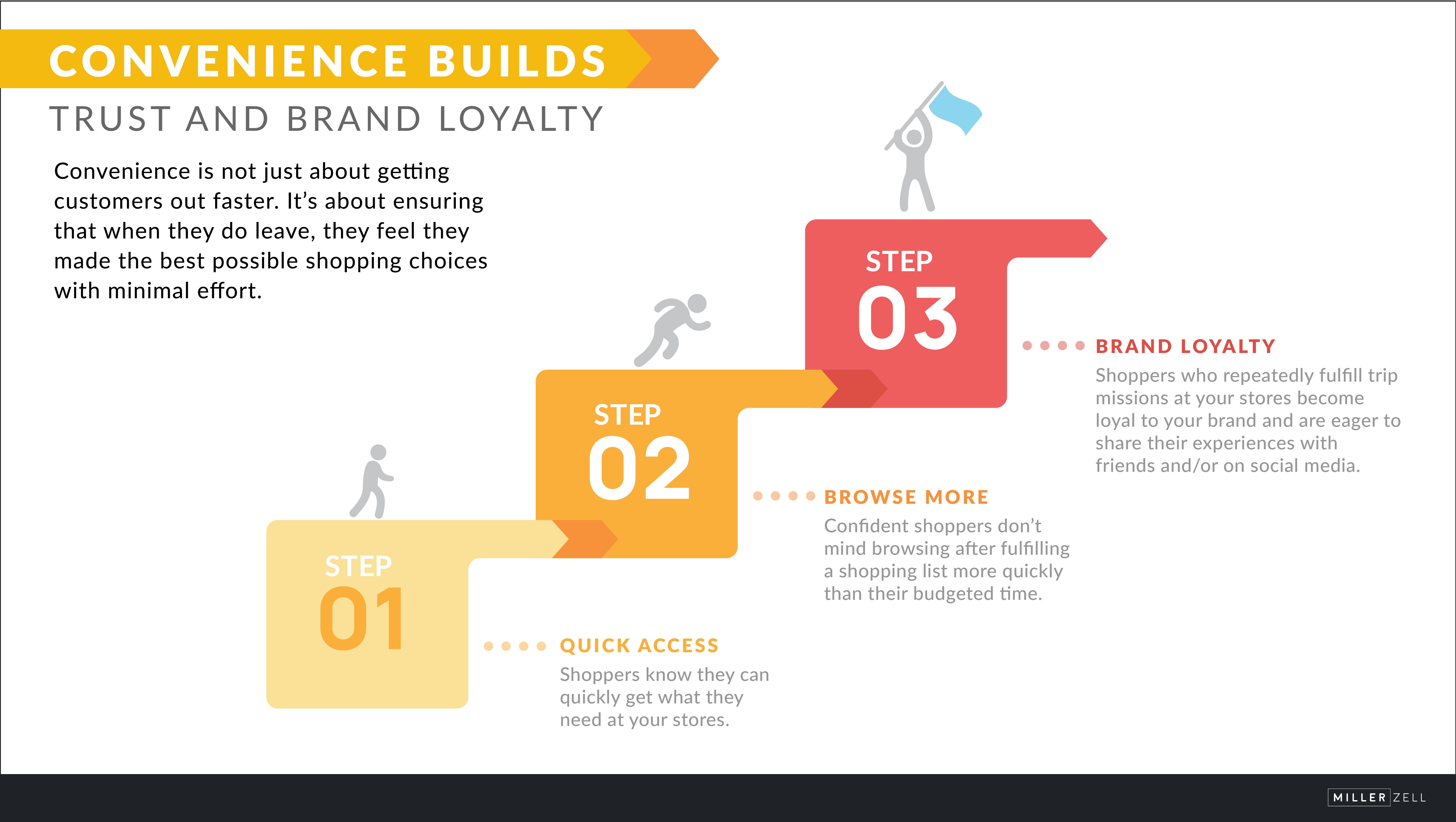
Convenience builds trust and then brand loyalty
To simplify the thinking here:
- Step one: Shoppers know they can quickly get what they need at your stores.
- Step two: Confident shoppers don’t mind browsing after fulfilling a shopping list more quickly than their budgeted time.
- Step three: Shoppers who repeatedly fulfill trip missions at your stores become loyal to your brand and are eager to share their experiences with friends and/or on social media.
Convenience is not just about getting customers out faster. It’s about ensuring that when they do leave, they feel they made the best possible shopping choices with minimal effort.
Convenience is a foundation of the customer experience. All your customers want it. And it’s not an impersonal, mechanical process.
When designed and implemented intentionally, it becomes a foundation of confident shopping that makes more meaningful engagement possible