.png?width=170&height=44&name=MillerZell_Outline_Black_NO-Tagline_CLEAN-01%20(1).png "Miller Zell")














Prefer listening? Press play above to listen on the go.
This audio is auto-generated. Please let us know if you have feedback.
Retail once operated with distinct lanes that rarely intersected: 1. Value and best prices; 2. Superior and engaging shopping experiences.
Times change and retail evolves. Customers today want value, particularly with inflation a constant challenge, but they also value a quality shopping experience.
Customers want to save money during efficient and productive store visits — they also are won over by store design details that elevate the shopping experience and maybe even provide inspiration.
This means retailers focused on optimized store development need to balance cost, speed, brand engagement and overall experience.
Here’s how.
1. A holistic approach to store development
2. High-impact zones that upgrade customer experiences
3. Store designers, logistics and operations aligned
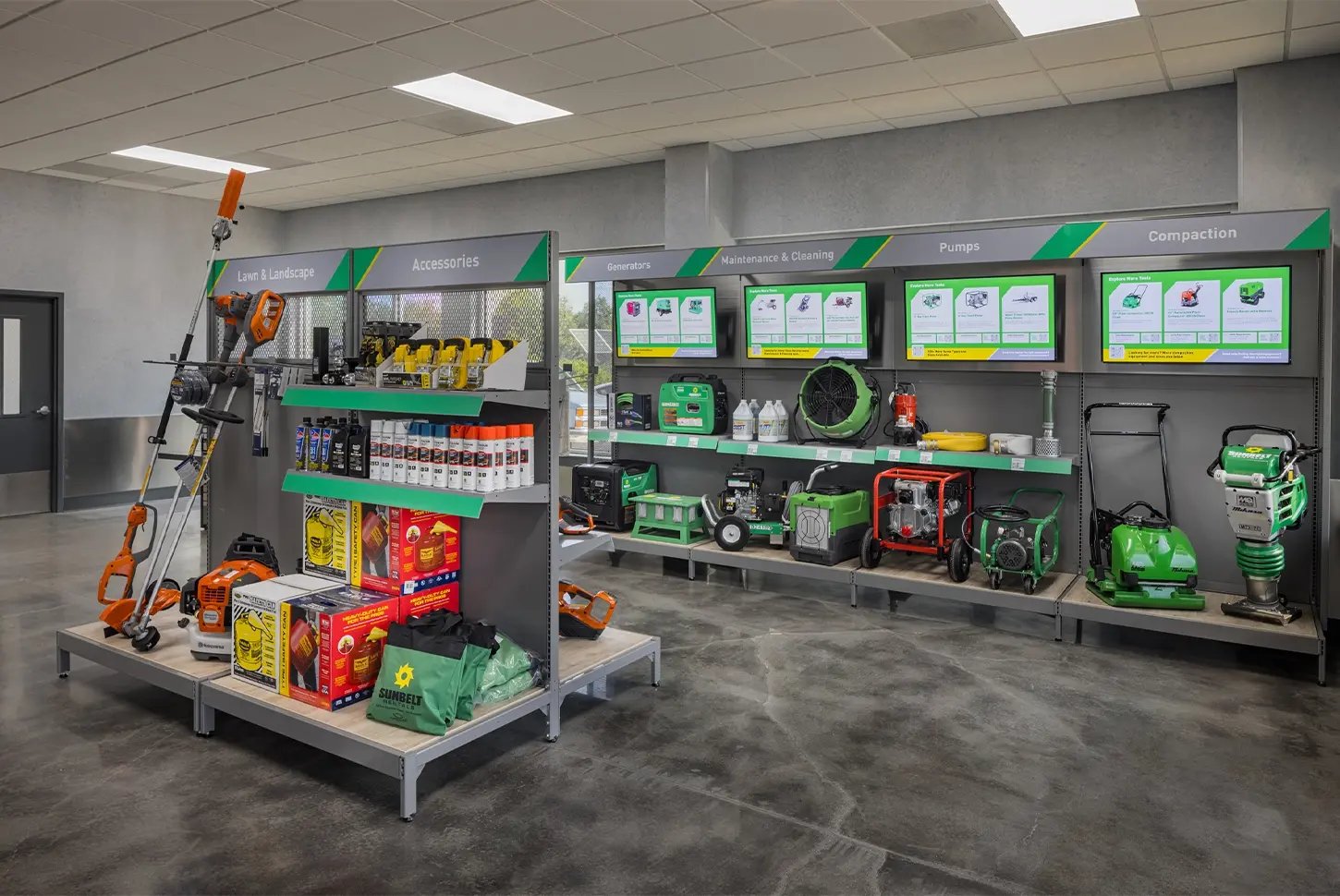
Sunbelt Rentals was zoned for interaction with strategic layout and tool assortment to help renters quickly locate and learn about the options for their project needs. A moveable demo station enables associates to help renters select the best tools while also learning about operation and safety features.
A holistic approach to store development
The optimized store development process balances budgets, brand consistency, speed-to-market, localization and brand engagement.
No, that’s not easy to do. The central challenge is not simply opening or refreshing stores quickly. It’s creating strategically conceived, scalable environments that feel relevant, intuitive and emotionally connected to customers while remaining operationally precise.
Begin by identifying the non-negotiable elements of your brand experience. These are the components that foster consistency across every location regardless of footprint, market size or geography.
This often includes core materials, signage systems, customer service touchpoints, technology integrations, checkout experiences and primary wayfinding principles. These foundational elements establish branding guidelines and back- and front-of-the-house consistency.
An efficient process starts with a strategic review of your store fleet and specific project goals.
- Where is customer and/or associate friction, whether that’s new or a lingering issue?
- How do you increase shopping efficiency for mission-driven shoppers?
- How do you design and scale new and memorable brand engagements that advance the customer experience?
When store designers understand a clear foundation for their work, they can advance toward fulfilling goals as they move through prototyping and testing toward design development and scaling.
This process leads to defined kits of parts that are modular, adaptable and engineered for consistent execution across varied footprints and regions.
This is not about compromise to feed efficiency and reduce costs, though it does exactly that. It is a design framework that simplifies processes and clearly establishes brand elements, experience standards and spatial logic that should be incorporated into every location.
You create and scale a great, purposeful experience that shoppers love while still meeting budgets and timelines.
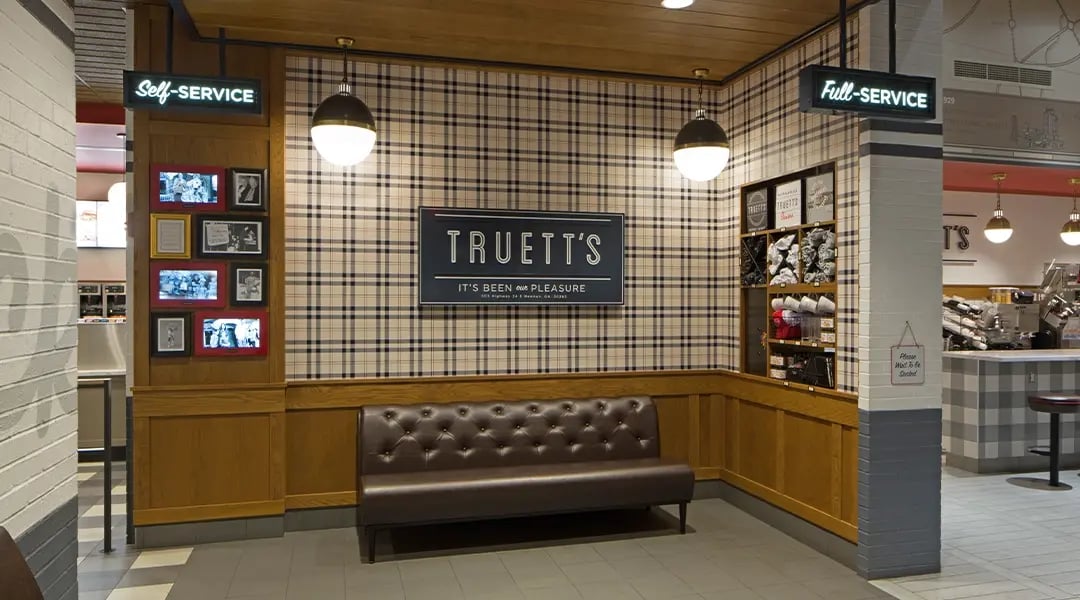
Miller Zell assisted Chick-fil-A in creating a welcome zone to connect with customers. We put up a photo wall in the waiting area. While the black and white photos celebrate Cathy, the red frames on the wall surround digital screens that allow restaurant customers to post photos through social media.
High-impact zones that upgrade customer experiences
While kits of parts help standardize store elements and branding, modular environments also allow for variations that support localization, special events or holidays and evolving customer behaviors.
High-impact zones are strategically placed areas within the customer journey that create emotional engagement, storytelling opportunities or discovery moments without requiring the entire store to be customized.
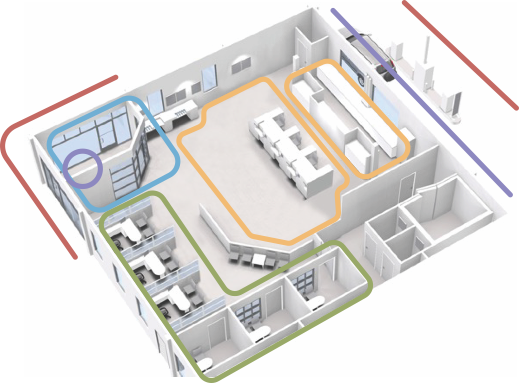
Examples of high-impact zones include:
- Front-entry experience areas
- Seasonal storytelling displays
- New product launch zones
- Community or locally curated sections
- Digital engagement hubs
- Service and consultation spaces
- Grab-and-go convenience zones
Integration of Micro Center app and store design significantly improved customer and associate experiences. Store wayfinding and signage were upgraded to be pleasing and purposeful.
These zones are not static. Flexibility is key, and different footprints will use the same modular fixture systems differently. Displays, graphics, lighting packages and merchandising systems should be standardized in dimensions and infrastructure while allowing content flexibility. This enables retailers to refresh messaging, products and localized experiences quickly without costly remodels or operational disruption.
Technology, front and back of house, also plays a major role in balancing scale and engagement. Digital signage, dynamic content systems, agentic AI assistance and mobile integrations allow retailers to localize messaging instantly while maintaining centralized control and brand consistency. This reduces the cost and lead time associated with traditional physical updates. Stores become more adaptable without requiring constant physical reinvestment.
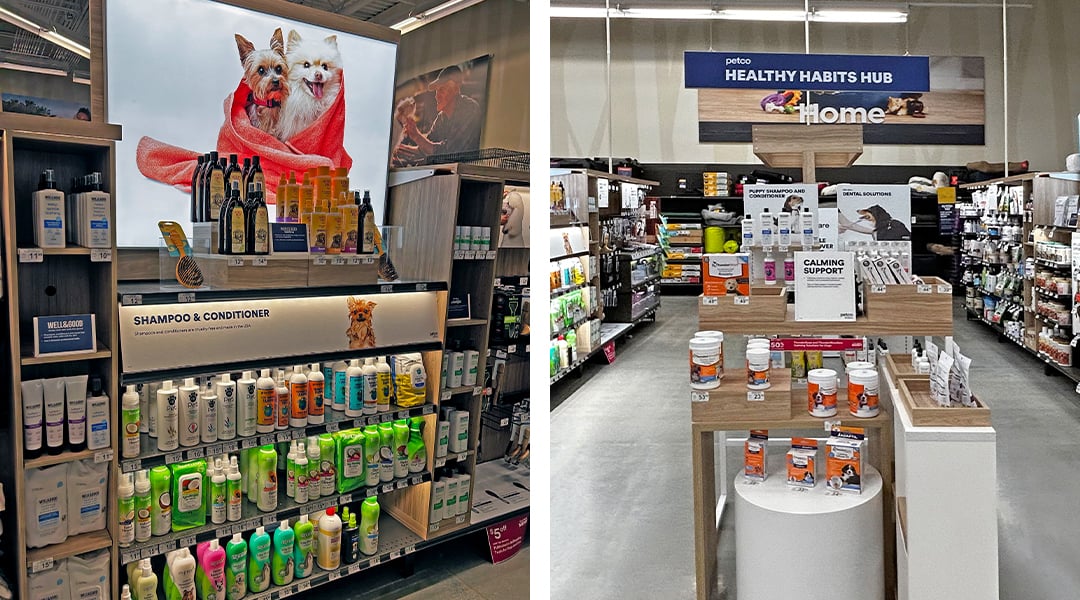
Petco's “Healthy Habits Hub” and “Well&Good” signage gave the store-within-a-store a distinctive look that motivated customers to “keep your pet well, for good.”
Store designers, logistics and operations aligned
A brilliant design that busts budgets and is impossible to scale or provokes operational friction is a retail failure. And a design that deploys quickly and under budget doesn’t actually pay for itself when customers provide a “Neh.”
When the strategic review, design, design development, prototyping and rollout are optimized with clear goals and transparent communication from concept to completion, your resulting efficiency feeds upgraded quality that all customers will see, both during mission-driven shopping and in your high-impact zones.
“Customer expectations, technology and shopping behaviors change too quickly for rigid, inflexible systems. ”
The process builds on itself. You design and execute so stores are engineered to support fast replenishment, flexible merchandising updates, efficient labor deployment and simplified maintenance. You also design and execute to achieve better operations behind the scenes.
Consider every project, campaign, refresh or large-scale rollout as a continuous evolution rather than static deployments. Customer expectations, technology and shopping behaviors change too quickly for rigid, inflexible systems. The most effective retailers create, nurture and expand scalable processes that evolve incrementally through pilot testing, modular updates, agile deployment and test-measure-and-adjust processes.
Retailers generate revenue and grow by meeting customers with a mutually beneficial psychological understanding. Customers want value and satisfying shopping experiences, and that combination often varies day to day, year to year. But your store is there to deliver the desired experience — whatever the trip mission, time of year or generational quirks.
Retailers can deliver both value and experience by systematizing a design and execution process for efficient, scalable environments without sacrificing the emotional engagement that drives customer loyalty and long-term brand value.