.png?width=170&height=44&name=MillerZell_Outline_Black_NO-Tagline_CLEAN-01%20(1).png "Miller Zell")















Prefer listening? Press play above to listen on the go.
This audio is auto-generated. Please let us know if you have feedback.
Great branding is critical for every business.
A great brand is how you make your customers feel. It is the culmination of carefully selected visual elements like colors, logos and typography, combined with messaging through language, storytelling and connection.
You could make a case it’s even more important for financial institutions because trust is foundational to the customer relationship. So, when banks review their branding, there’s a need for a keen and strategic precision while projecting forward, ensuring you match goals and execution.
This often isn’t about wholesale reinvention, rebranding post-merger or a significant brand overhaul. It’s about a thoughtful, goal-driven refinement and evolution that are in stride with environmental updates.
A well-executed brand evolution enables financial institutions to modernize their identity while preserving the brand equity that has been earned through years of customer relationships.
In this blog, we'll discuss:
1. Bank evolution = brand evolution
2. Phased approach to branch brand refresh
3. Holistic planning and design strategies for consistent branding, branch upgrades
4. Because, yes, brand evolution is about ROI
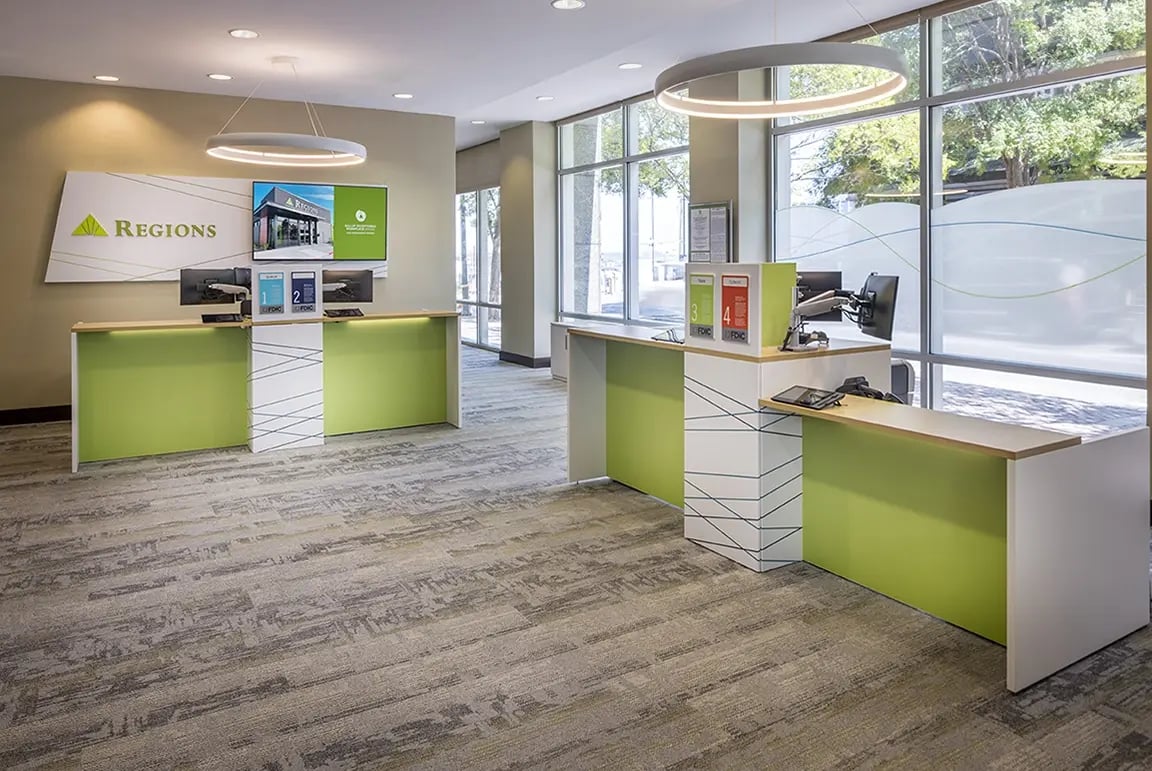
Regions enhanced their teller stations. A digital surround on the teller stations’ back wall creates a stronger, branded focal point within the branch. Upgraded lighting serves as an additional accent for these customer touchpoints.
Bank evolution = brand evolution
Your bank’s branding tells a story for your potential, new and loyal customers. It is expressed through commercials/advertisements, social media and every customer interaction, from physical encounters with the branch design and digital experiences to in-branch engagement and service delivery.
Your branding also tells a story for your associates, and supporting and upgrading their experience and customer interactions is a critical part of this aligned banking and branding evolution. You don’t want changes in operational workflow that can alienate associates and disrupt their rhythm of service.
By rolling out upgrades deliberately and strategically, banks allow their staff to adapt, learn and become reenergized brand advocates rather than victims of an unfamiliar new system. When employees feel empowered by a transformation rather than overwhelmed by it, the customer experience remains consistent, efficient and engaging.
“You don't want changes in operational workflow that can alienate associates and disrupt their rhythm of service.”
Therein lies the foundation of this connected process. As customer expectations continue to evolve, banks must ensure these touchpoints meet contemporary needs and values, such as efficiency, accessibility, convenience, transparency and personalized service. And your brand intertwines with those great customer experiences on both a conscious (physical) and subconscious (mental) level.
Your brand’s evolution does not marginalize the visual and emotional cues that customers already recognize and trust. They build upon them, embracing incremental, phased updates that strengthen and modernize brands over time.
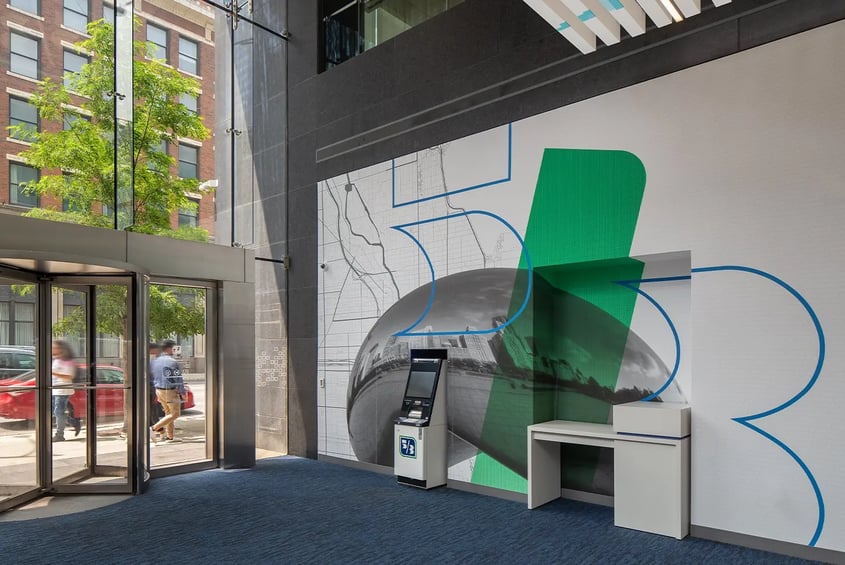 Fifth Third wanted a dynamic, customer-centric banking experience within its refreshed branches, one that is aesthetically pleasing, purposeful and flexible. Whether it’s digital displays or wall vinyl or lighting, our program management maintains end-to-end efficiency and transparency until installation is complete
Phased approach to branch brand refresh
Successful brand transformation strategies balance modernization and longstanding customer wants and needs by using phased updates to align physical environments, customer experiences and brand perception without disrupting the relationships customers already value.
Customers experience these gradual improvements as signs of your environmental investment rather than rote change. Banking tasks aren’t just different for the sake of new technology or easy profits. They are improved without the customer/associate burden of complex re-learning or new rules.
Familiar layouts, recognizable brand elements and consistent service standards remain intact while branches become brighter, more efficient and better equipped to support modern banking journeys. This continuity reinforces customer confidence, particularly for financial institutions where trust, stability and reliability are among your brand’s greatest assets.
Phased implementation also potentially provides significant operational and financial advantages for large branch networks.
Rather than investing substantial capital in simultaneous major renovations across hundreds or thousands of locations, banks can prioritize updates based on market opportunity, branch performance, lease cycles or scheduled maintenance.
Coordinating brand enhancements with existing capital improvement programs minimizes disruption, reduces costs and creates greater flexibility to adapt as customer behaviors continue to change.

Holistic planning and design strategies for consistent branding, branch upgrades
Updating and adopting a cohesive branding and rebranding framework leans into creating or updating a structured branding playbook. That’s about creativity partnering with design efficiency and consistency.
This approach allows banks to confidently refresh branch environments to varying degrees (good, better, best), update customer-facing technology, refine merchandising and messaging and introduce new service experiences within a defined process.
Each improvement reinforces your institution’s evolving identity while maintaining continuity for existing customers.
A well-planned brand evolution also creates opportunities to better align the physical branch with changing business priorities. As routine transactions increasingly migrate to digital channels, branches are becoming destinations for advisory services, financial education and relationship-building.
“Part of the process is also observing and tweaking... your process.”
Updated environments can support this shift through more welcoming hospitality-inspired spaces, flexible consultation areas, integrated digital tools and improved wayfinding that supports navigational ease and encourages meaningful customer engagement. These enhancements communicate a more contemporary brand while preserving your institution’s established identity.
Part of the process is also observing and tweaking... your process.
A measured bank brand evolution enables your organization to test, learn and refine new design and project execution standards before deploying them broadly.
Pilot branches can validate customer response, operational efficiency and return on investment, allowing design guidelines to mature before network-wide implementation. This reduces risk while ensuring future investments deliver measurable business value.
Because, yes, brand evolution is about ROI
Sometimes branding and retail or branch design discussions can become a bit esoteric, laden with jargon and theoretical musings.
You know, like someone trying to sell you something.
Miller Zell is comfortable knowing and embracing your bottom-line motivations and goals, which are about improving your business, growing your customer base and increasing revenue.
A successful brand transformation is not defined by how dramatically a bank changes its appearance or how much attention that transformation gets from media, both news and social. It’s about how effectively it strengthens customer perception while supporting long-term business objectives.
Bank branches that are visibly better than they were two years ago — cleaner, smarter, easier to navigate and staffed by people who seem genuinely invested — tell customers that your bank is paying attention and reinvesting in their relationship.
By balancing brand modernization with continuity, banks can create branch experiences that feel relevant and customer-centered without sacrificing the familiarity and trust that remain central to enduring financial relationships.
Brand evolution becomes not simply a design initiative but also a strategic framework for sustaining relevance, elevating existing assets and building stronger customer connections across an entire branch network.