.png?width=170&height=44&name=MillerZell_Outline_Black_NO-Tagline_CLEAN-01%20(1).png "Miller Zell")















Prefer listening? Press play above to listen on the go.
This audio is auto-generated. Please let us know if you have feedback.
Accessibility in retail store development has long been treated as a checklist of federal codes. Ramp grades, door widths, restroom access, parking, service counters, etc. must be ADA (Americans with Disabilities Act) compliant.
Entirely justifiable. A good start. But what if, just like with every new rule, idea or trend in retail, these only represent starting points for innovative thinking?
Retailers have an opportunity to think bigger and better and foster more value.
It starts with asking how your physical and digital store environments can make every customer’s journey easier, more intuitive and more comfortable.
In this blog, we'll discuss:
1. "Inclusive design" as a smart business decision
2. Retail design that anticipates real needs
3. Digital accessibility is part of omnichannel strategy
4. This approach benefits all your customers
5. Designing for scale means designing for everyone
6. Better experiences. Better retail.
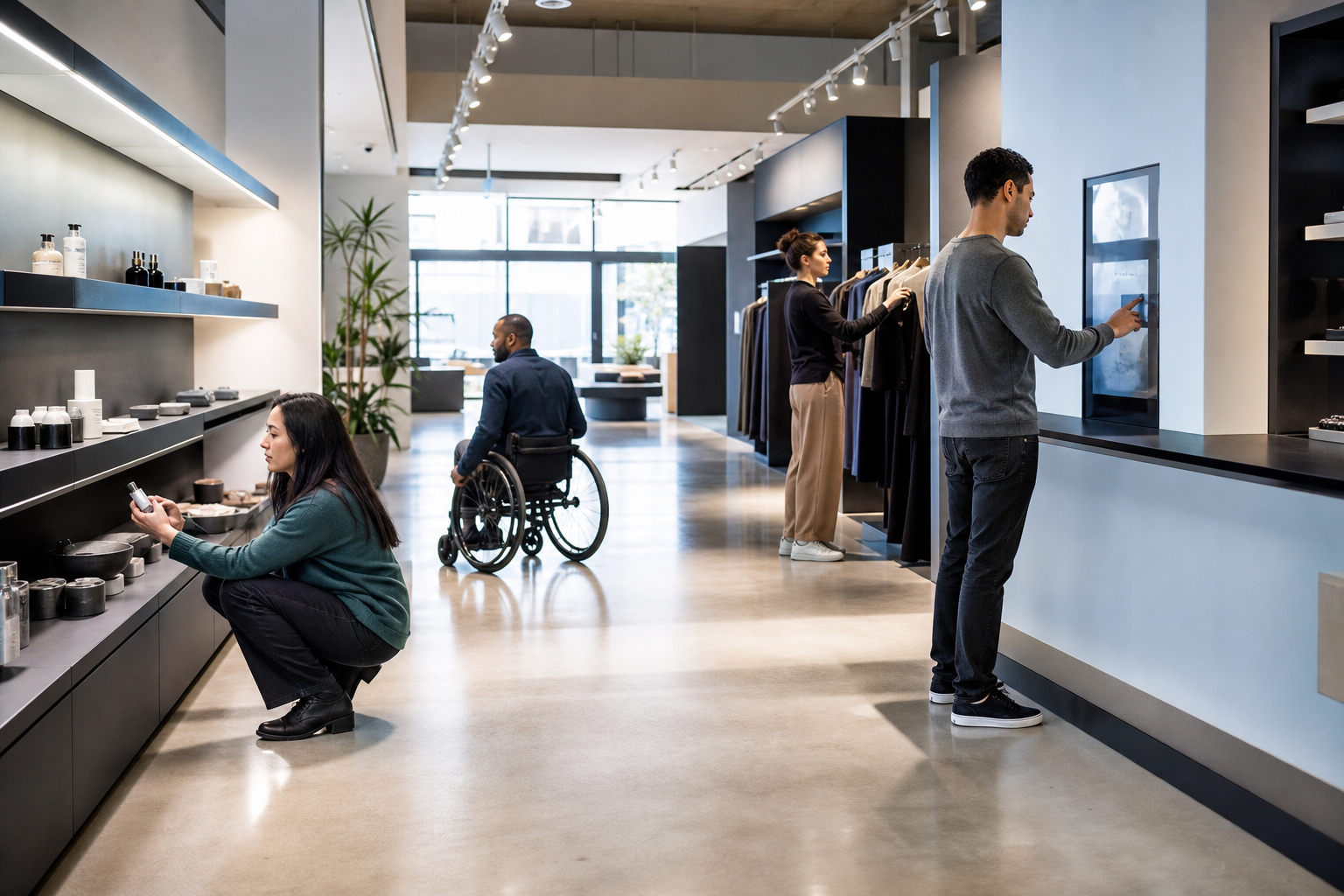
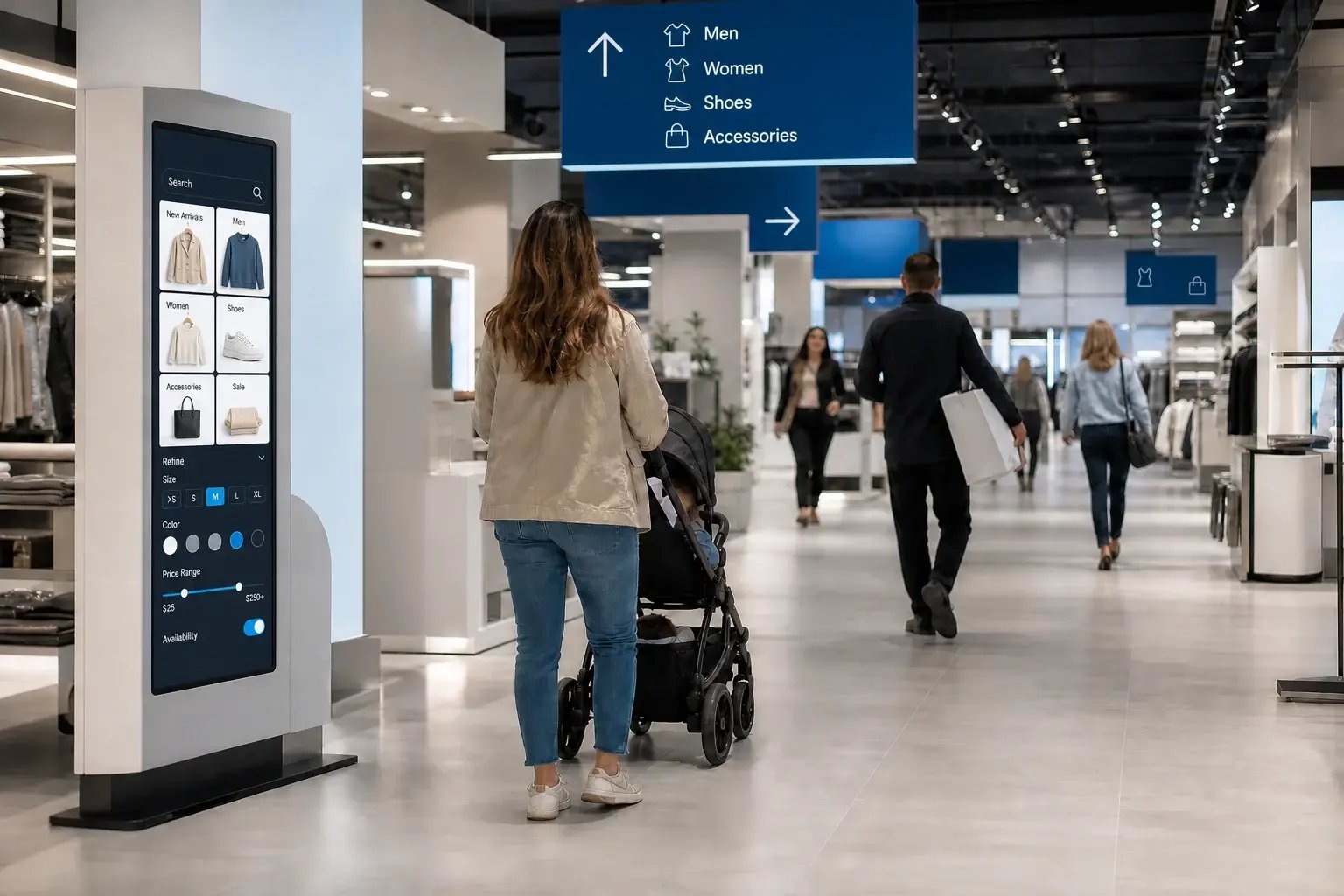
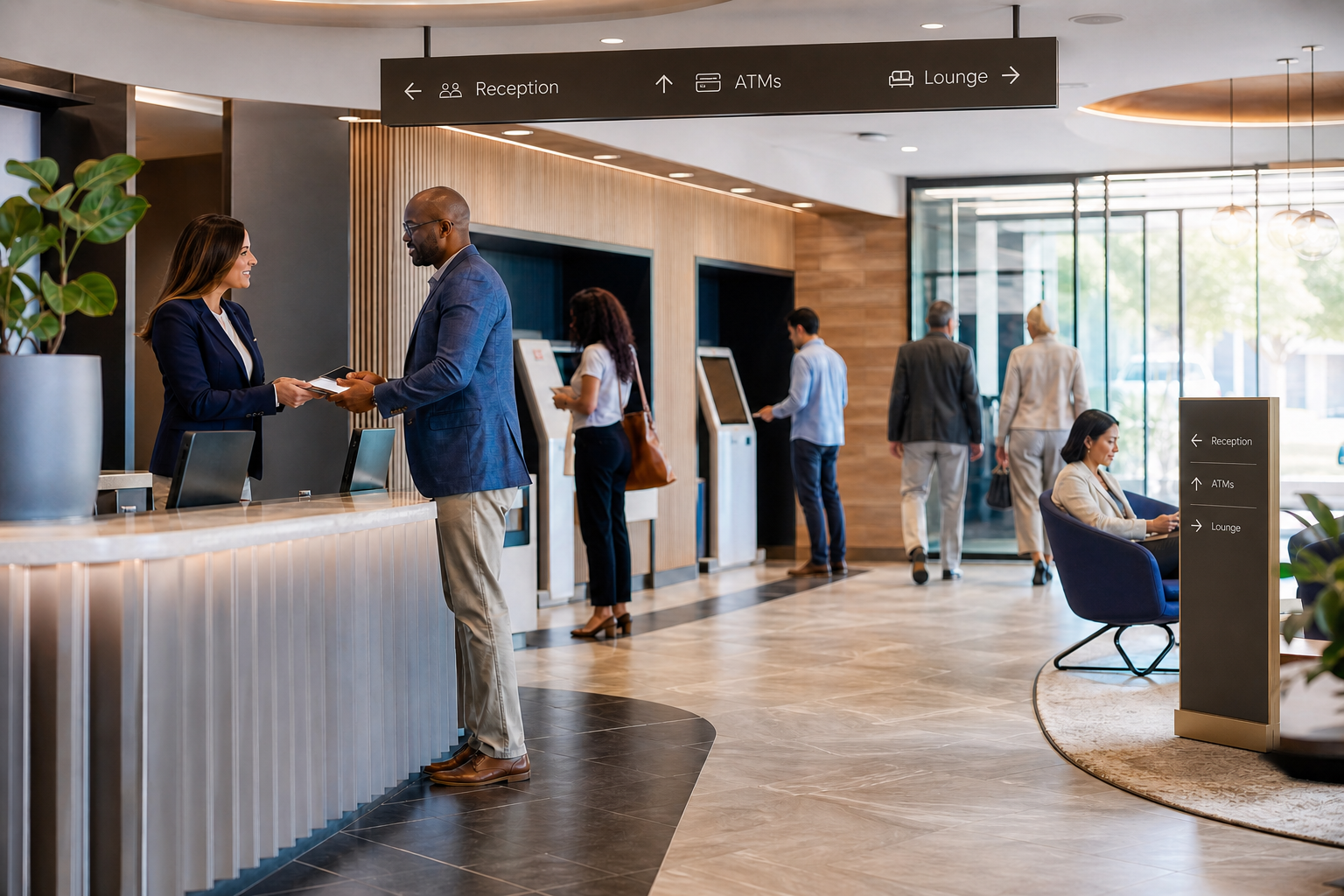 Clear wayfinding, accessible service points and intuitive digital touchpoints help create a more inclusive customer experience from arrival to transaction.
“Inclusive design” as a smart business decision
Point A is simple. You review and analyze accessibility requirements. Then you figure out how to design and execute them better at scale than your competitors.
Simple to type, not as easy to implement, of course. But this is a truly valuable approach.
Beyond legal requirements, devising strategic solutions here can expand your customer base. According to the Centers for Disease Control and Prevention (CDC), about one in four adults in the U.S. has a disability. Your specific awareness of their needs and then meeting them with the best possible support reduces their shopping stress and cultivates brand loyalty from what is an often underserved market.
While some now smirk and grouse at the idea of corporate social responsibility, that is noise, not bottom-line reality. Businesses that care about their customers and try to improve all shopping experiences will achieve ROI through customer satisfaction and positive word of mouth, both on- and off-line.
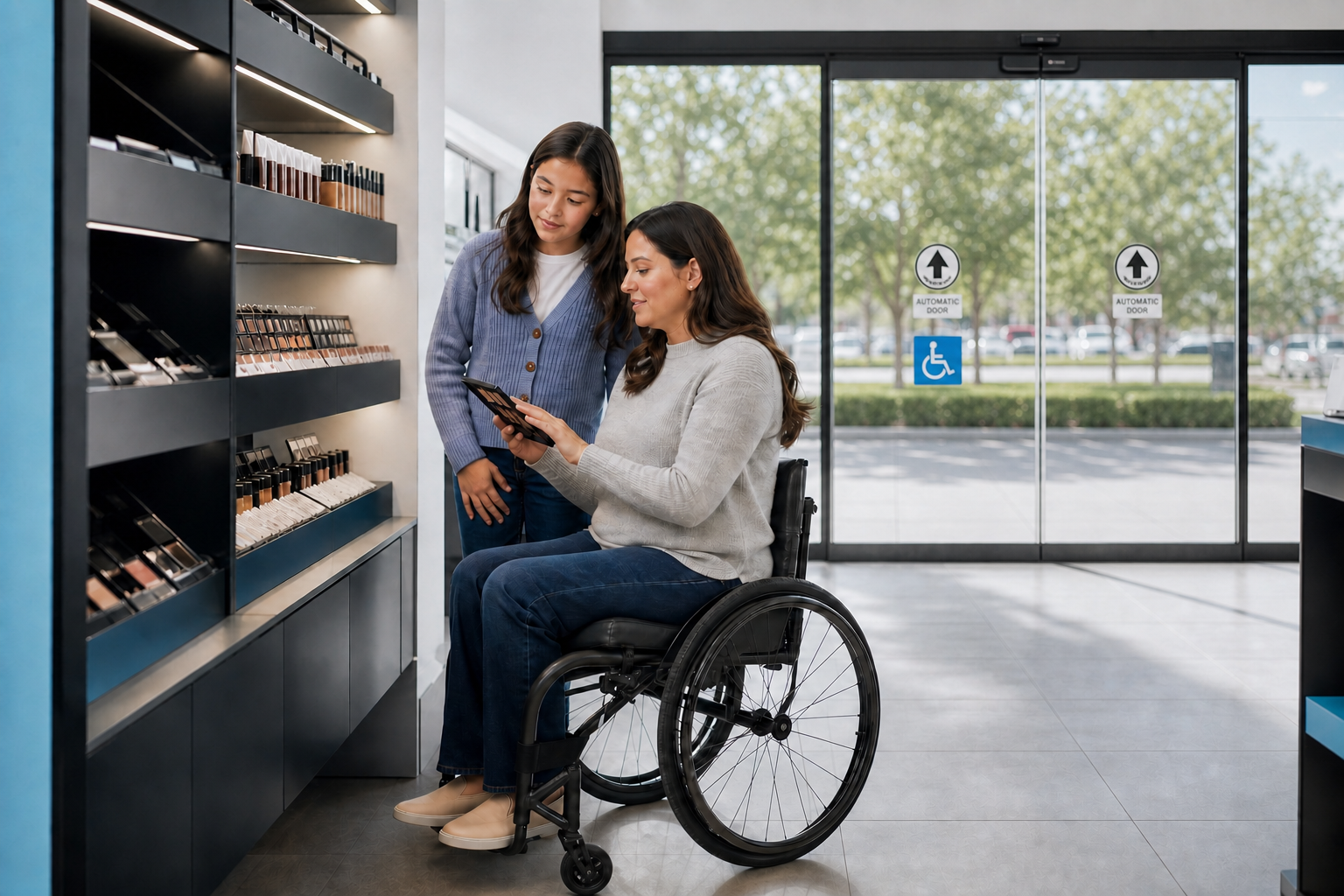 Accessible entrances, intuitive layouts and reachable displays help create retail environments that are easier to navigate and more comfortable for every customer.
Retail design that anticipates real needs
Customers entering stores today are more diverse than ADA codes anticipated.
Aging shoppers make up a growing share of retail spending (nearly 40% for 60 and above). Customers with mobility and physical limitations navigate stores every day. Neurodiverse customers, including those with autism, ADHD and sensory-processing differences, represent a significant and often overlooked segment. None of these groups are well served by a store that merely clears a legal bar.
Designing with those customers in mind can remove friction that affects everything from entering the store and finding products to navigating checkout and getting help.
Inclusive design evolves from a different question. It’s not just about “What is required?" but what actually works for all the people using this space.
Accessibility as part of your customer experience strategy
A store built for accessibility at scale considers the full customer journey, not just isolated compliance and accessibility points.
This includes:
- Wider, clearly defined aisles that accommodate wheelchairs, walkers and strollers without requiring customers to ask for help
- Lower, more accessible product placement for high-demand items, not just the minimum required reach range
- Seating throughout the store, not only at checkout, giving aging or fatigued shoppers a place to rest
- Consistent, predictable layouts across locations, which matter for neurodiverse customers who rely on familiarity to reduce anxiety
- Lighting and acoustic choices that avoid — or warn about — harsh glare or overwhelming noise, both common sensory triggers
In large part, these are design decisions, not legal ones. They require the same rigor as brand strategy and store layout because they directly shape whether a customer can shop comfortably or not. These also can reduce unnecessary obstacles, visual clutter and confusing transitions between departments for all shoppers.
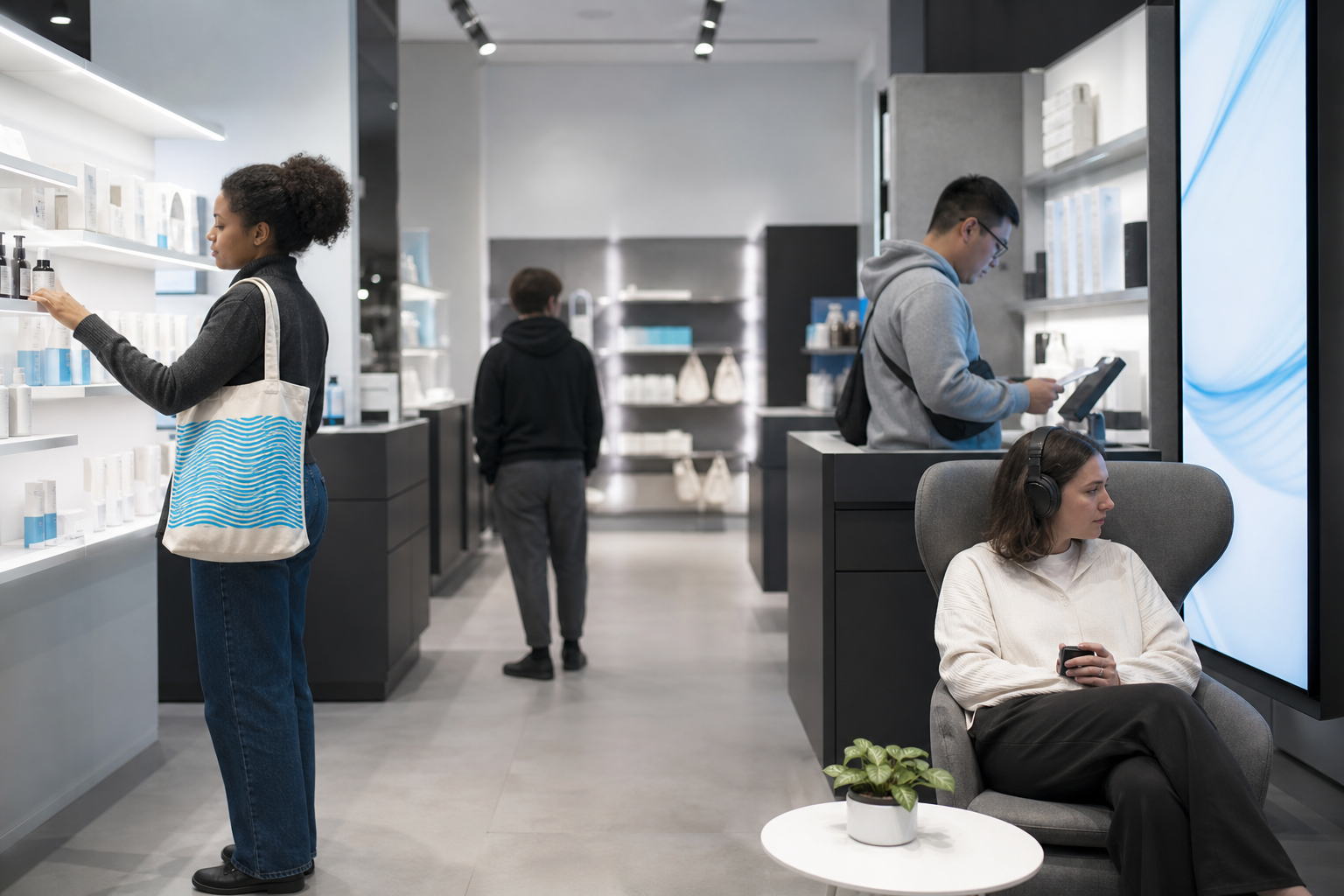 Wider aisles, lower product placement, built-in seating and predictable layouts help create a calmer, more accessible retail experience that supports comfort, confidence and independence.
Digital accessibility is part of omnichannel strategy
Accessibility thinking for branded environments doesn’t stop at the physical footprint. Mobile apps, digital signage, self-checkout, loyalty programs and other technologies should be designed and integrated so customers with different abilities and cognitive needs can use them confidently.
That means:
- Kiosks and digital signage with adjustable text size, high-contrast display options and voice support
- Self-checkout systems designed with simple, predictable interaction patterns
- Clear wayfinding that pairs visual cues with text, reducing reliance on any single sense
- Digital and physical systems that work together, so a customer researching accessibility features online finds the same experience in the store
A customer with a visual impairment, a cognitive processing difference or simply an unfamiliarity with new technology should not need to guess how a kiosk works or search for an associate to complete a basic transaction.

This approach benefits all your customers
Consider our nine bullet points above from a general customer perspective. Most will sound good to all customers, as well as your associates, who will distinctly value your efforts if they have a family member with a disability.
The ultimate retail design goal isn’t to create a separate experience for certain customers. It is to create a better experience for everyone.
Wider aisles help parents with strollers and customers carrying large purchases as well as reduce shopping cart traffic jams. Clear, predictable signage helps every shopper move through a store more quickly. Simple digital interfaces reduce frustration for customers of every age and ability.
This is the principle behind inclusive design. You’re solving for the edges of your customer base and also improving the experience at the center of it too.
Designing for scale means designing for everyone
For retailers operating dozens, hundreds or thousands of locations, inclusive design cannot be a store-by-store decision. Build it into your design systems, including prototyping and testing before rollout, and then apply it consistently across every location.
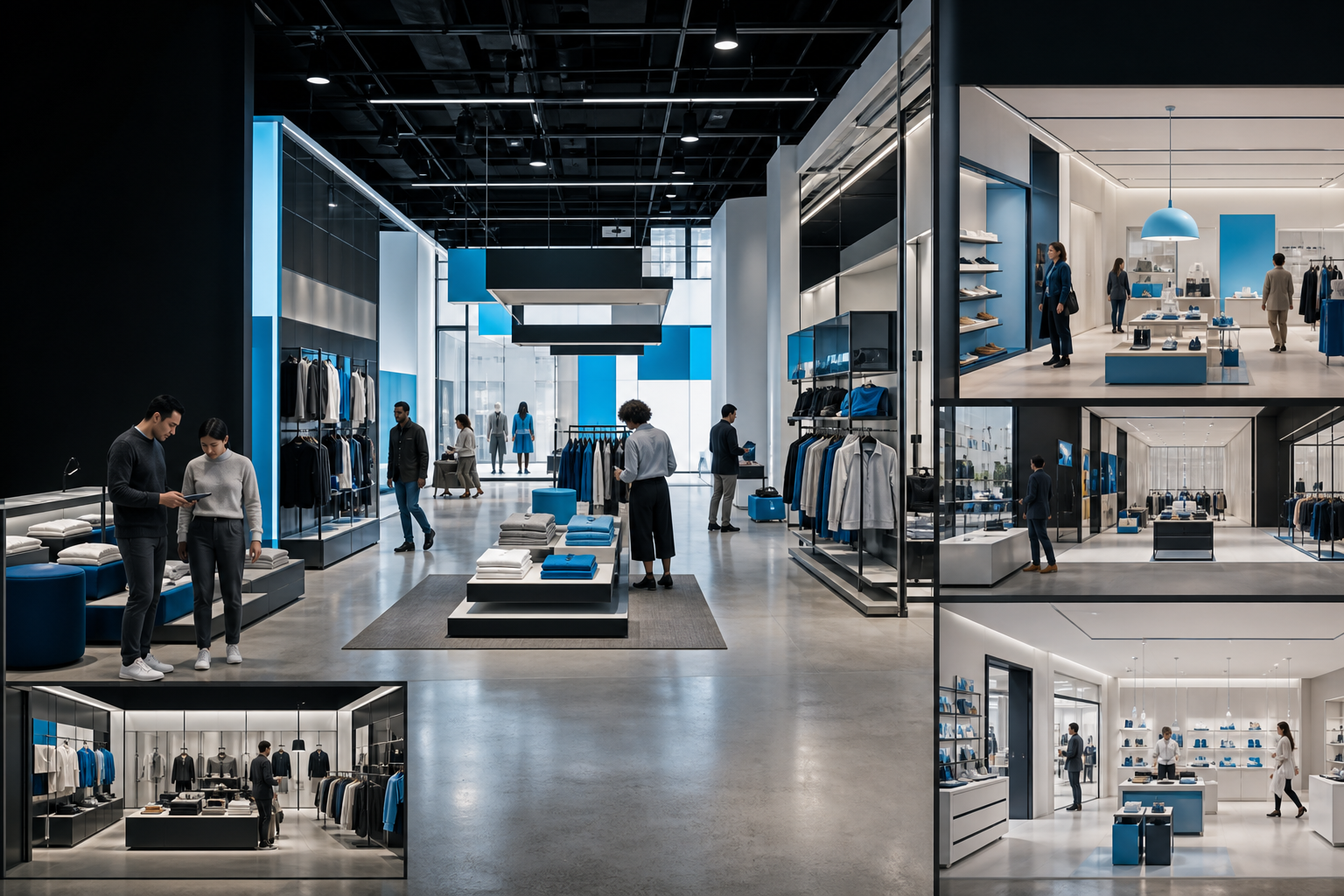
Designing for inclusion at scale creates a consistent customer experience while allowing retailers to account for differences in store formats, footprints, demographics and markets.
This is a real opportunity for optimized branded environments, leaning into strategic, intentional design and efficient, agile execution.
Better experiences. Better retail.
Inclusive design isn’t simply about complying with regulations or serving a particular segment of customers. It’s about recognizing that customers don’t all experience a store in the same way.
Retailers that design for those differences can create environments that are easier to navigate, more welcoming and more intuitive, while strengthening the brand experience for everyone.
At Miller Zell, we believe the most effective and valuable retail environments balance creativity with practicality and customer experience with operational realities.
When accessibility and inclusion are considered from the beginning and designed into the environment at scale, retailers can move beyond compliance to create stores that work better for every customer, every journey and every location.