



Prefer listening? Press play above to listen on the go.
This audio is auto-generated. Please let us know if you have feedback.
For multi-location retailers, branding consistency doesn’t mean every store looks the same. The goal is creating an immediately recognizable and optimized retail brand experience while allowing store environments to accommodate different markets, footprints, formats and customer needs.
A customer should recognize your brand whether entering a neighborhood store, a suburban flagship or a compact urban location. But recognition shouldn’t depend on encountering the same floor plan everywhere.
The answer isn’t unlimited customization or rigid repetition. It’s a store development system that defines core brand elements and understands where strategic flexibility serves customers better.
In this blog, we'll discuss:
2. Design strategically for different markets, formats and footprints
3. Your associates, your brand
4. Build flexibility into your store development process
5. Localization strengthens brand with useful differences
6. An efficient system for great store experiences at scale
Define brand standards
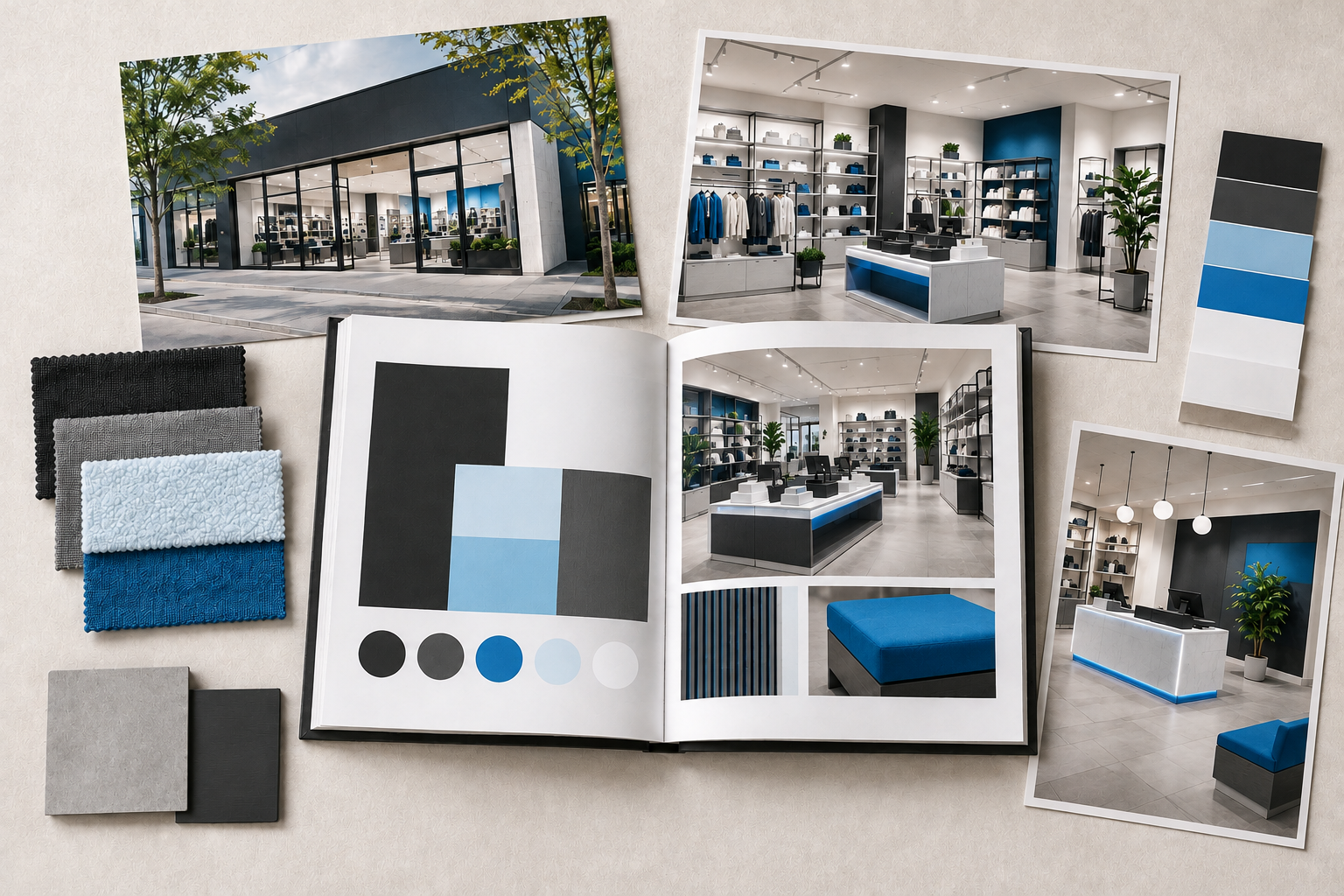
While establishing and maintaining brand consistency might sound obvious, it’s the critical Point A for beginning the concepting and design process for branded environments.
Clearly establish and present to internal teams and vendor partners your brand identity and brand-consistent ways to present it, no matter the store-to-store differences.
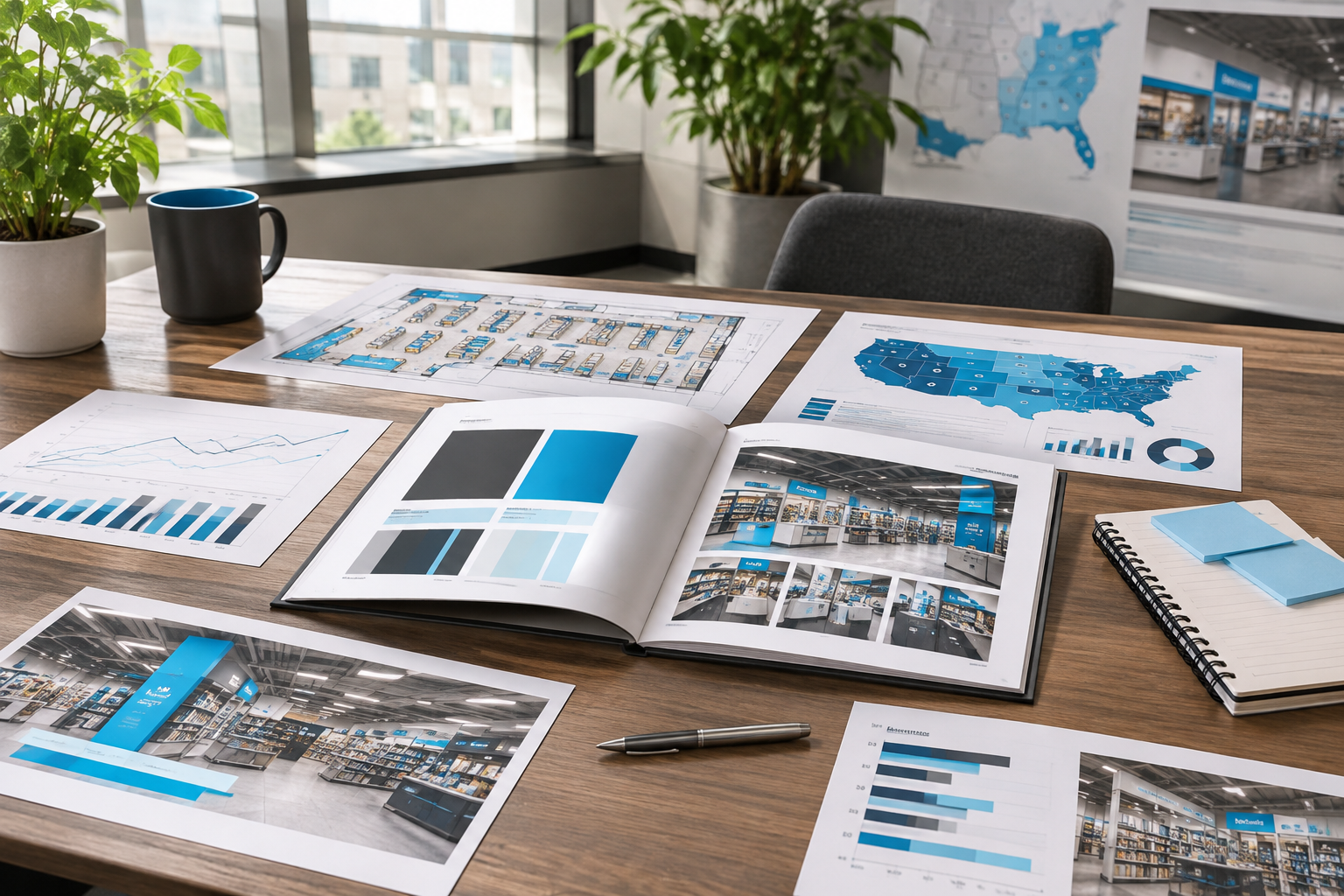
Create a brand playbook that sets standards and an all-encompassing visual language, including logos, colors, fonts, images, primary and secondary slogans and verbiage. This ensures brand-right consistency from parking to entrance, to browsing or mission-driven shopping, to checkout and to exit.
Establishing guidelines for all types of branding makes new interior or exterior signage or décor elements and new technology easier to implement, wherever your designs, print needs, digital touchpoints or manufacturing originate.
Organize the standards around three questions:
- What must remain consistent across every location?
- What can change within approved options?
- What requires review before an exception is approved?
This structure gives designers, operators and installation teams clear direction without requiring identical solutions. As with all things retail, optimizing the brand experience at your stores is about creative, strategic, holistic and pragmatic thinking. Branding guidelines establish clarity within that thought process.
Design strategically for different markets, formats and footprints
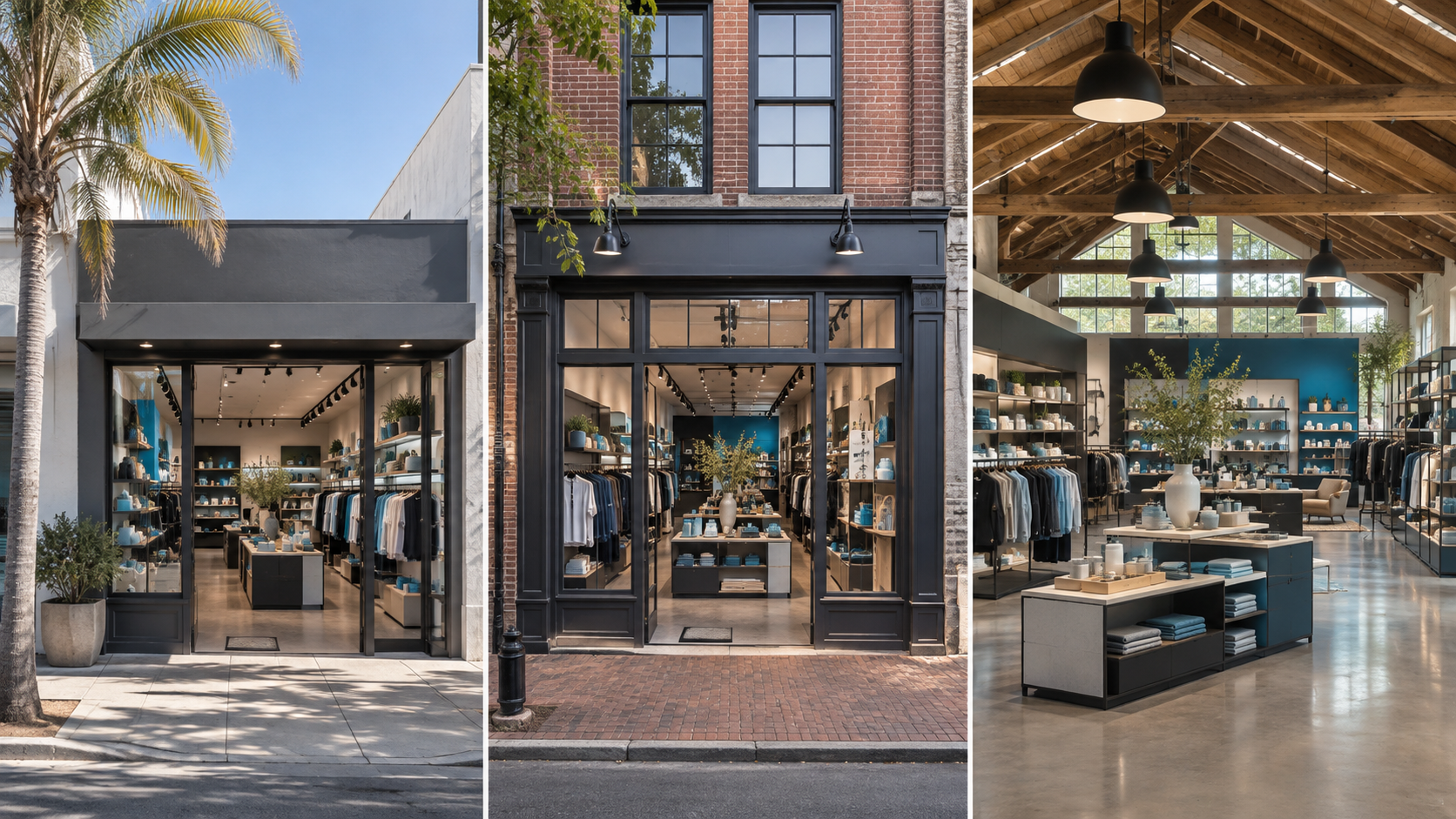
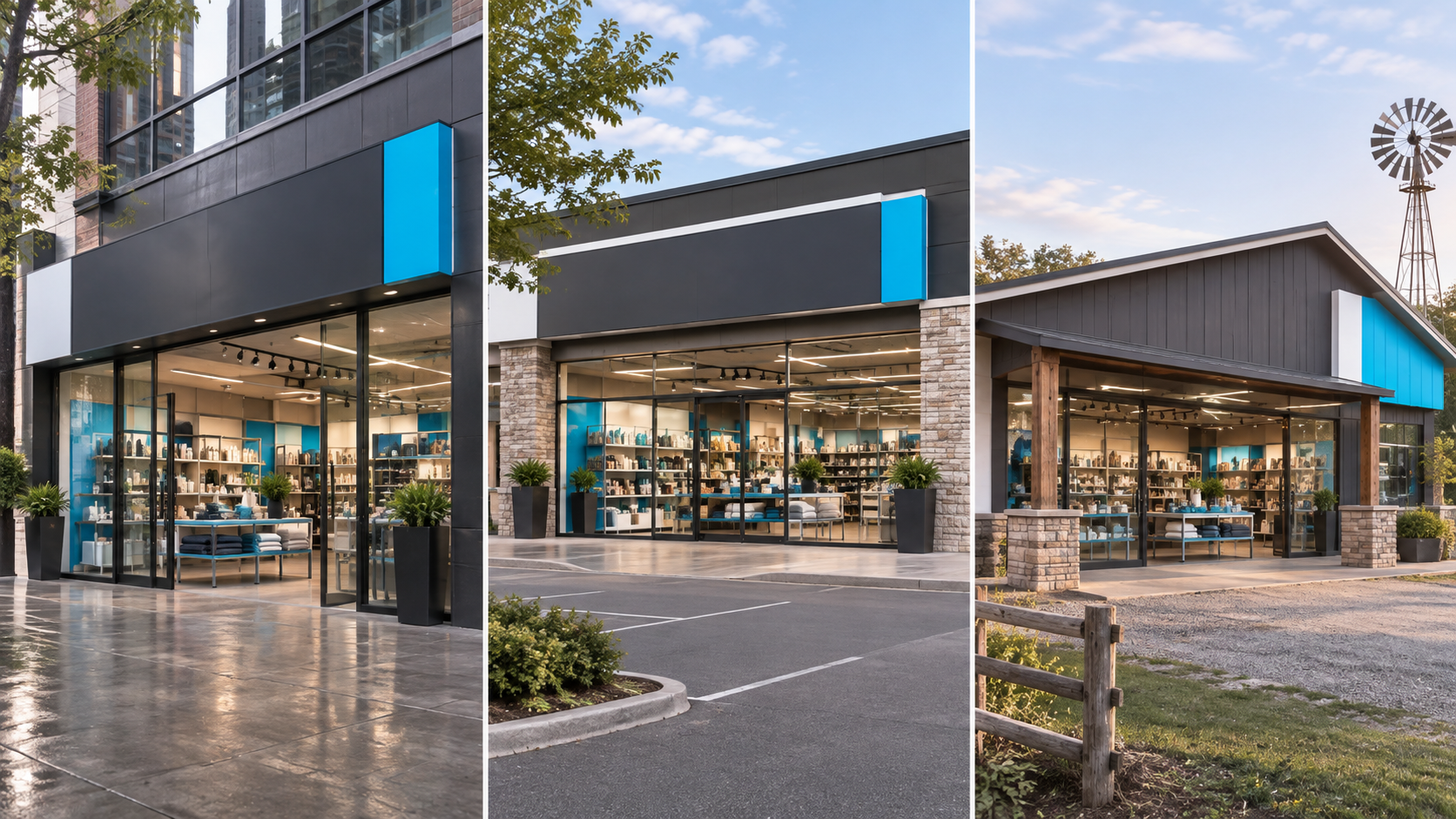
As previously noted, a store serving an urban neighborhood has different needs than one located in a rural market. And urban in LA is different than urban in Boston. Customer demographics, shopping behaviors, real estate constraints, product assortments and regional preferences all influence how a store should look and function.
Incorporating this nuanced knowledge into your store designs provides you value by serving your business goals.
Intuitive, flexible design layouts that understand different footprints and formats, local market considerations and merchandising and product differences become part of your brand reputation and create brand loyalty.
Retailers can address these differences through a flexible, scalable design system built around modular components and adaptable fixtures, whatever the layouts’ needs or constraints. A large-format store might incorporate expanded product displays and experiential zones, while a smaller footprint prioritizes efficient circulation, high-demand categories and convenient checkout.
Regional customization can also influence product presentation, messaging, merchandising and localized experiences. The key is to adapt the store to its market without compromising the brand’s core identity.
Your associates, your brand
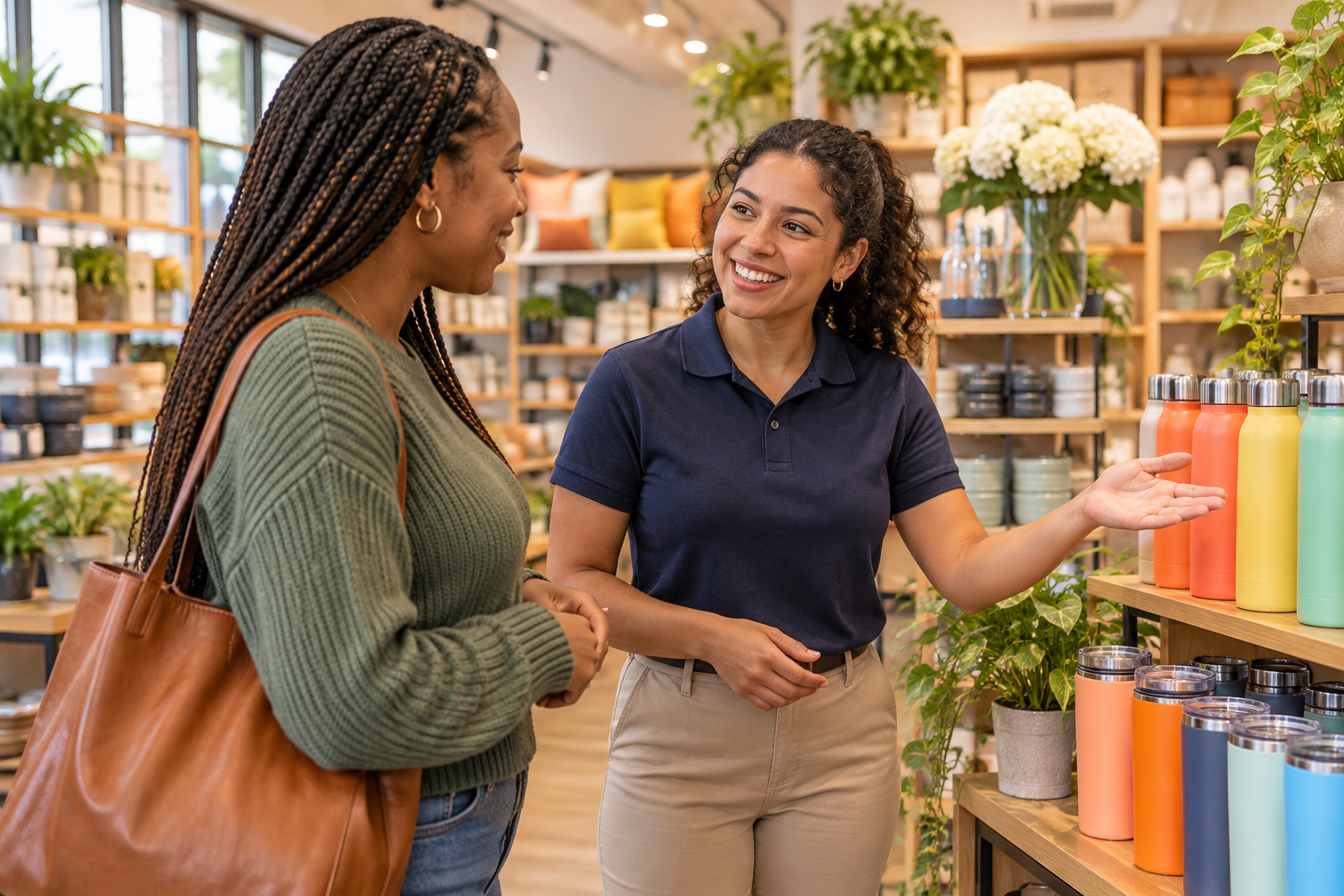
Store associates play a role here. During your design discovery phase, they can point out specific needs of the store format and footprint they use to serve your customers. This give-and-take interaction also includes emphasizing brand guidelines that they should maintain.
They are frontline brand representatives. You train them, you provide uniforms or branded attire and you reward them for good work. Part of your associate engagement is helping them buy into your brand identity and store design goals, which ensures that customer trip missions and associate interactions align with a great shopping experience.
Build flexibility into your store development process
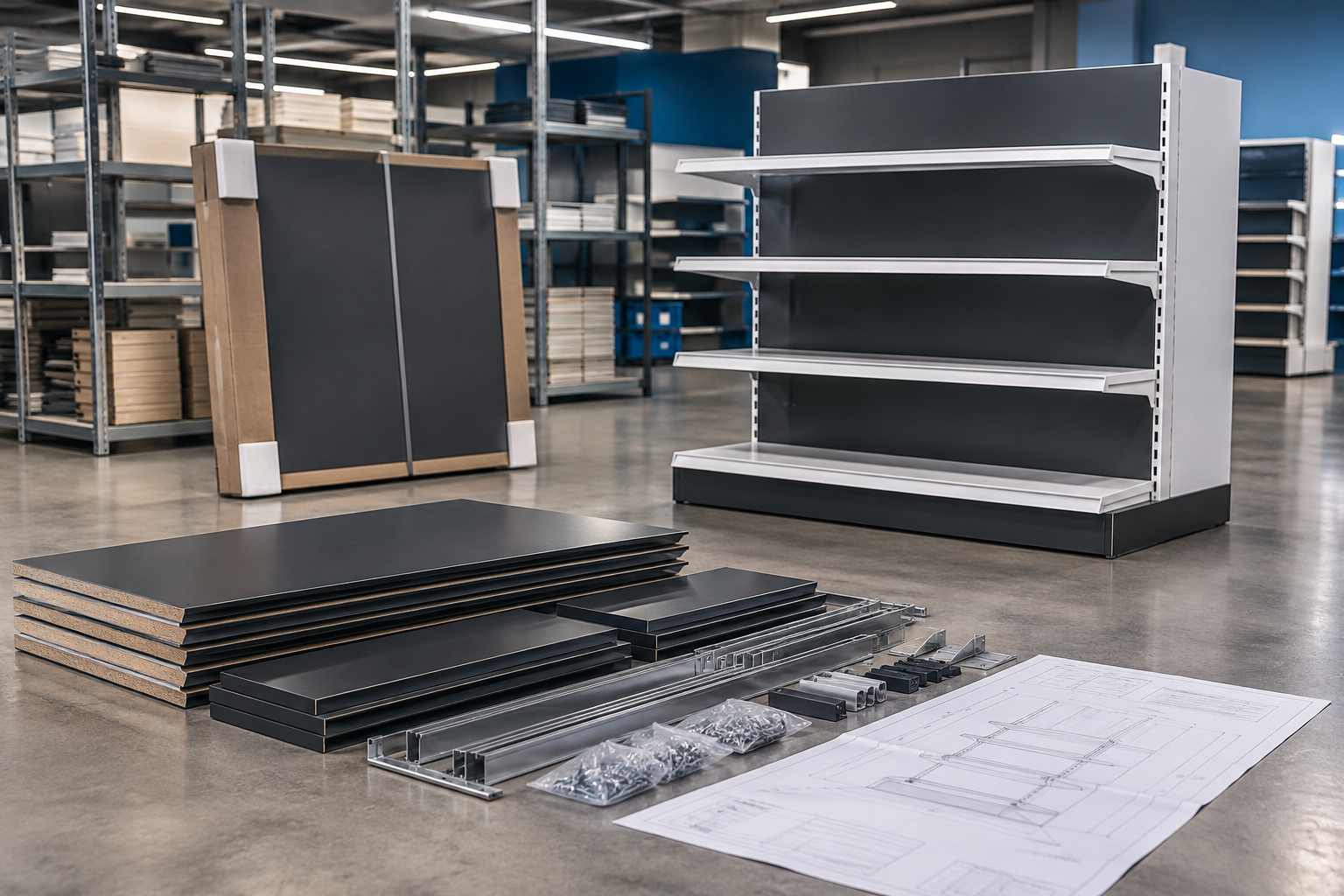
Achieving consistency, flexibility and efficiency across a national portfolio during a store refresh requires more than strong creative direction. It requires operational discipline throughout design, prototyping, engineering, fabrication, logistics and installation.
Standardized components, repeatable processes and precise kit packing make it easier to control quality, manage costs and accelerate rollouts. Define placement rules and acceptable configurations rather than forcing every location into one layout. Modular systems and scalable graphics allow retailers to adjust configurations without reinventing the design for every location.
“Flexibility works best when engineered early. Late substitutions and improvised resizing can undermine both brand integrity and installation schedules.”
Clear specifications and centralized program management ensure that regional adaptations remain aligned with brand standards. Retailers can accommodate different site conditions and market requirements while maintaining predictable execution across hundreds or thousands of locations.
Flexibility works best when engineered early. Late substitutions and improvised resizing can undermine both brand integrity and installation schedules.
When these store development capabilities work together, flexibility becomes a strategic advantage rather than a source of inconsistency.
Localization strengthens brand with useful differences
The most effective store development programs balance centralized branding and design leadership with local market intelligence. Corporate teams establish the vision and standards, while regional insights help inform decisions about assortment, space allocation, customer flow and store functionality.
Use market research, store performance and associate feedback to understand how people shop. Evaluate assortment needs, language preferences, pickup demand and expectations for personal assistance.
Ongoing performance measurement is equally important. Sales data, customer feedback, operational observations and associate input can reveal where a standard design works well and where adjustments could improve results. These insights help retailers refine their store systems over time, turning flexibility into a continual source of improvement.
An efficient system for great store experiences at scale
The goal is not to create thousands of identical stores. It is to create thousands of stores that deliver the same brand promise in ways that make sense for diverse regions and markets.
The competitive advantage comes from consistency of experience, not uniformity of appearance. Retailers that combine a recognizable brand identity with adaptable design systems can respond to diverse customer needs, maximize the value of different real estate formats and execute programs efficiently at scale.
By designing for both consistency and flexibility, brands create retail environments that feel unmistakably connected while remaining relevant to the communities they serve