.png?width=170&height=44&name=MillerZell_Outline_Black_NO-Tagline_CLEAN-01%20(1).png "Miller Zell")















Prefer listening? Press play above to listen on the go.
This audio is auto-generated. Please let us know if you have feedback.
A technology-fueled concept of “experiential retail” developed in the mid to late 2010s to describe the shift from generally transactional shopping to immersive in-store experiences. It was largely created to help stores compete with and later augment online platforms.
Just like Gen Z, it’s matured. And when something matures, it typically grows more valuable and relevant for businesses operating in the public sphere — see the latest movie releases.
That means store development focused on experiential retail should evolve from gimmicks, spectacle and “Let’s try this!” toward meaningful engagement that improves service, relevance, convenience, emotion and brand loyalty, whether that’s centered on technology or not.
Here’s how to do that:
1. Superficial thinking fails retail store development
2. Design customer experiences that meet specific goals
3. What experiential retail actually is
4. Experiential retail beyond technology
5. Bottom line: Meaningful engagement
Superficial thinking fails retail store development
But, first, let’s understand what doesn’t work.
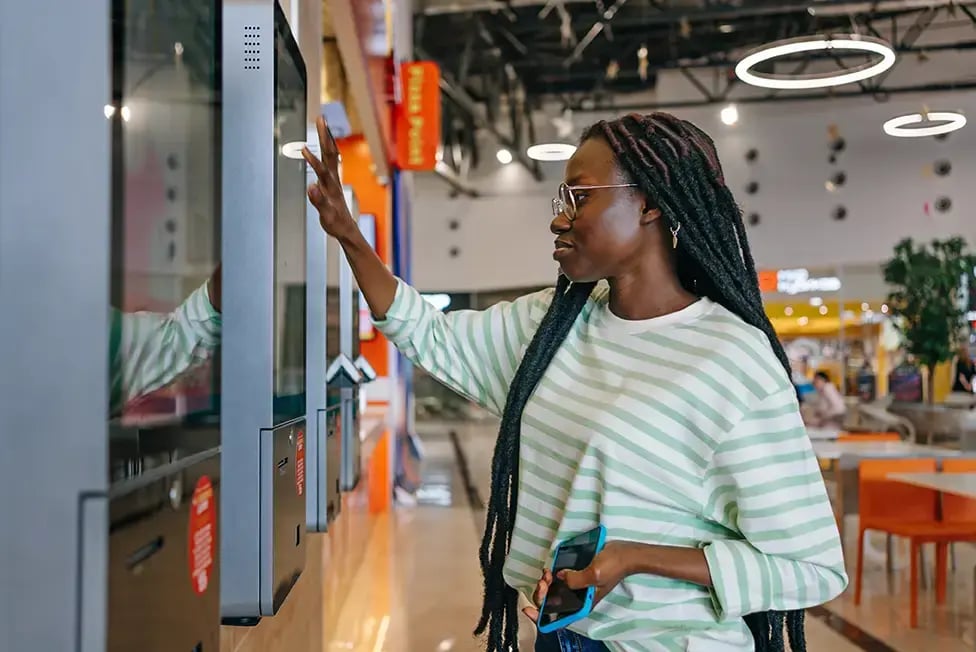
Over the past decade-plus, retailers invested heavily in immersive installations, interactive screens, augmented reality demonstrations and social media-worthy moments designed to generate buzz and foot traffic.
There were plenty of “wows.” Yet while these new shopping experiences often attracted attention, many struggled to deliver measurable business value, particularly in terms of creating consistent customer use and engagement. Or ROI.
There were many challenges and shortcomings connected to new technology:
- Digital screens installed but content irregularly updated
- Kiosks that looked good at first but were clunky to use and often yielded as much frustration as shopping support
- Technology presented but not supported by eager, capable associates who could walk customers through the steps of use
- Social media liked in 2021… and then moved on
- Retailer apps that were practically useless and fraught with privacy issues
- Shoppers going, “Oh. Cool,” and then continuing on their way, providing underwhelming ROI for stores
Other experiential retail challenges were not necessarily technology related:
- Localization efforts amounting to one or two signs instead of strategic community connection
- Store elements that looked good for a month but then aged badly and were difficult to replace
- Flagship designs that won in Manhattan but were impractical to implement nationally for a variety of footprints and regions
- Redesigns that perhaps worked for a few quarters or even years but proved inflexible to adjust and improve… and then costly to replace at scale
- Promotions that unexpectedly became politically fraught, dragging retailers into social conflicts rather than fostering great customer experiences
Yes, there are better ways to upgrade your retail experiences.
Design customer experiences that meet specific goals
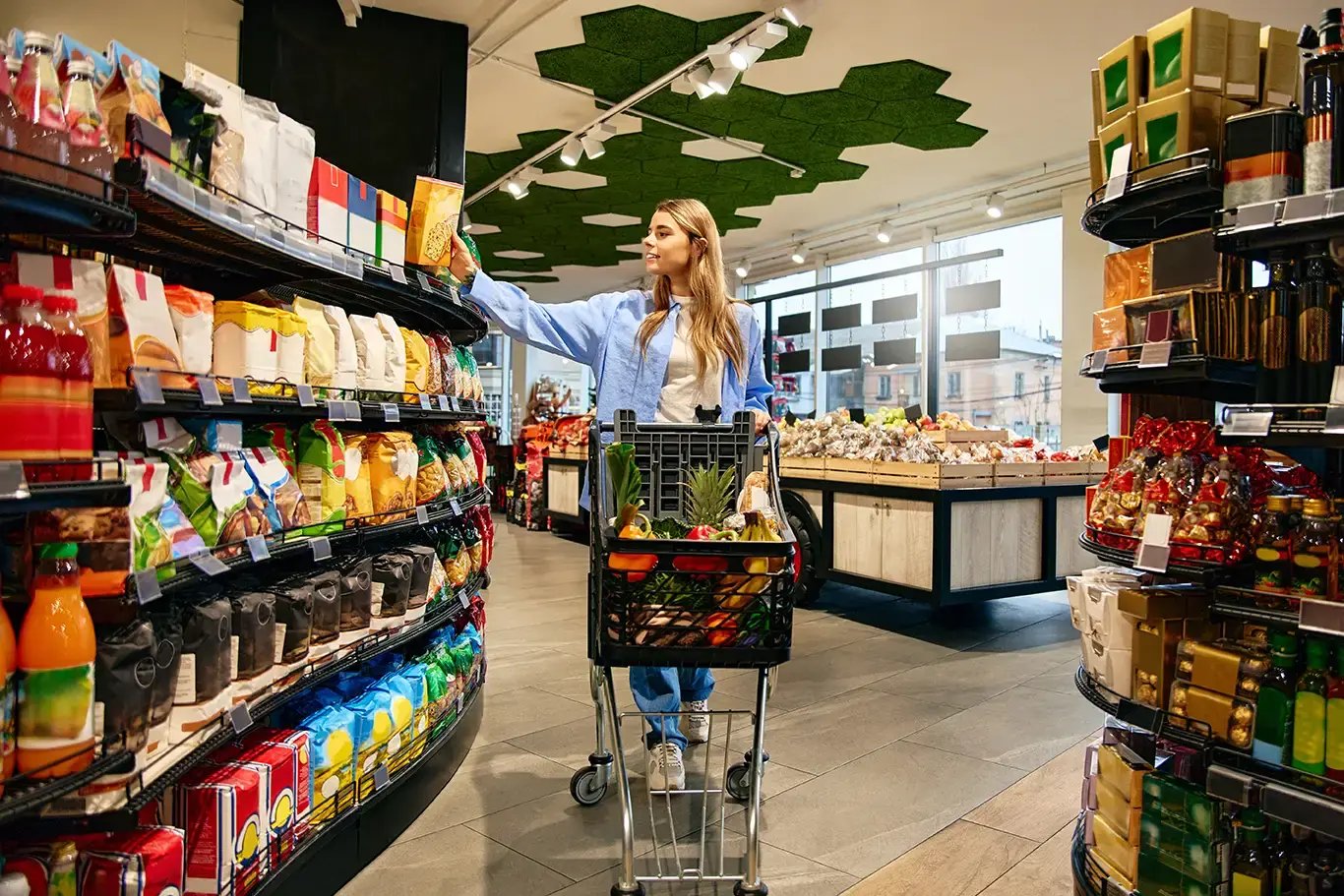
Customers visit stores to solve problems, fulfill needs and discover products in ways that match their trip missions, starting with efficiency and convenience and ending with satisfying and delightful moments that create meaningful brand connections.
Sometimes Customer A wants to buy soap, dinner and toilet paper as quickly as possible. Other times, Customer A impulse buys an Atlanta Braves jersey, grabs a bottle of Pinot Noir for his wife and chats with the butcher while picking the “Denver” steak cut for Sunday family dinner.
Seem a bit trite? Sure. But how does a retail designer create a store environment that nurtures and supports both widely different experiences, particularly the final three purchase decisions for a shopper no longer burdened by urgency?
“...after fostering relevance, convenience, confidence and emotional connection, your store experience is about supporting sales and customer loyalty.”
Does the store take note of how America’s Team owns the best record in baseball, which is self-aware localization, not only in Atlanta but for the entire Southeast? Wonder if those new hi-def screens might be useful for this. And it’s summer. Maybe not ideal for a Cabernet, but a new endcap with video of that kindly Napa winemaker (American made!) wandering his pristine vineyard while celebrating the marriage of price and quality kinda entrances. Finally, here’s a guess that display describing the “Three Most Underrated Steak Cuts” from six months ago still provides value to loyal shoppers, particularly with steak prices inflated as they are now.
A customer photographing a display or installation and sharing it on social media because it’s fancy and cool is great. But, ultimately, after fostering relevance, convenience, confidence and emotional connection, your store experience is about supporting sales and customer loyalty (so sales continue and grow).
What experiential retail actually is
Designing retail experiences always starts with convenience because that’s the primary experience shoppers want.
Customers view frictionless shopping, intuitive store layouts, clear navigation, easy pickup options and seamless checkout processes as positive experiences. Reducing stress and effort is the most meaningful way retailers can demonstrate respect for customers’ time and needs.
Technology can still foster a “wow” factor, but it is even more valuable contributing to a behind-the-scenes infrastructure and frictionless utility. It uses data to anticipate customer needs and streamline their journey. Unified commerce is about digital integration that solves customer and associate challenges, both front and back-of-house and online.
“Speaking of meaningful conversations, service has emerged as one of the most powerful forms of upgraded experiential retail.”
Digital tools help personalize recommendations, streamline operations, improve inventory visibility and enable omnichannel fulfillment. Technology becomes most effective when customers barely notice it because it simply makes the experience easier and more valuable. Further, your associates will be less afraid of AI when your agentic system makes their jobs easier and more enjoyable.
For example, ask retail associates whether they view digital price tags as a good or bad thing. Here’s a bet a vast majority will say “good” and note that they free them from a tedious task so they can engage customers in meaningful conversations.
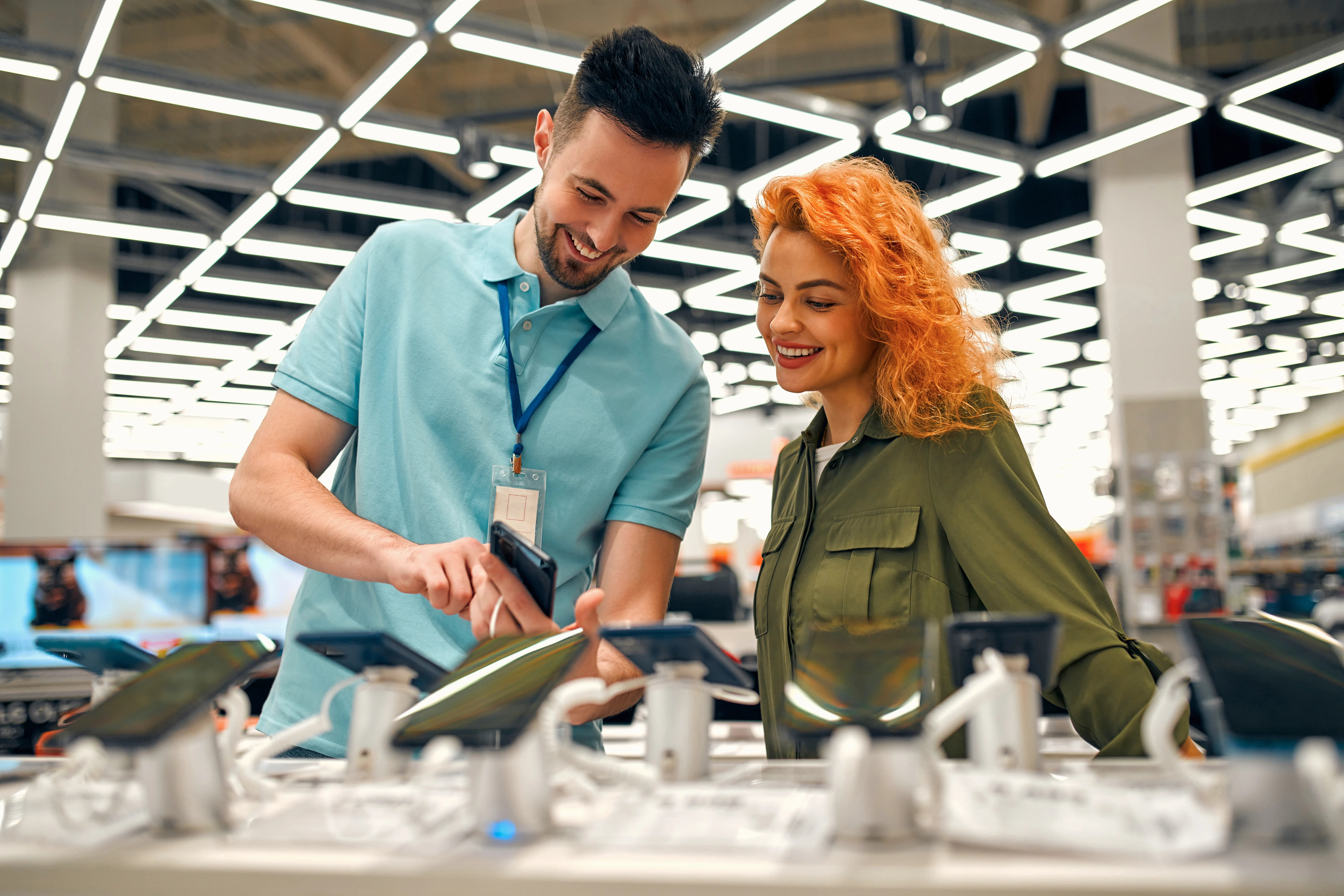
Speaking of meaningful conversations, service has emerged as one of the most powerful forms of upgraded experiential retail.
Knowledgeable associates, personalized recommendations, consultations, demonstrations and problem-solving interactions create memorable moments that technology alone cannot replicate.
A customer who leaves feeling understood, supported and even more knowledgeable is far more likely to return than one who simply interacted with a digital display.
Experiential retail beyond technology
Would your retail experience benefit from a sensory strategy? Probably at some level, even if you can’t help but smirk at the notion of “curated calm.”
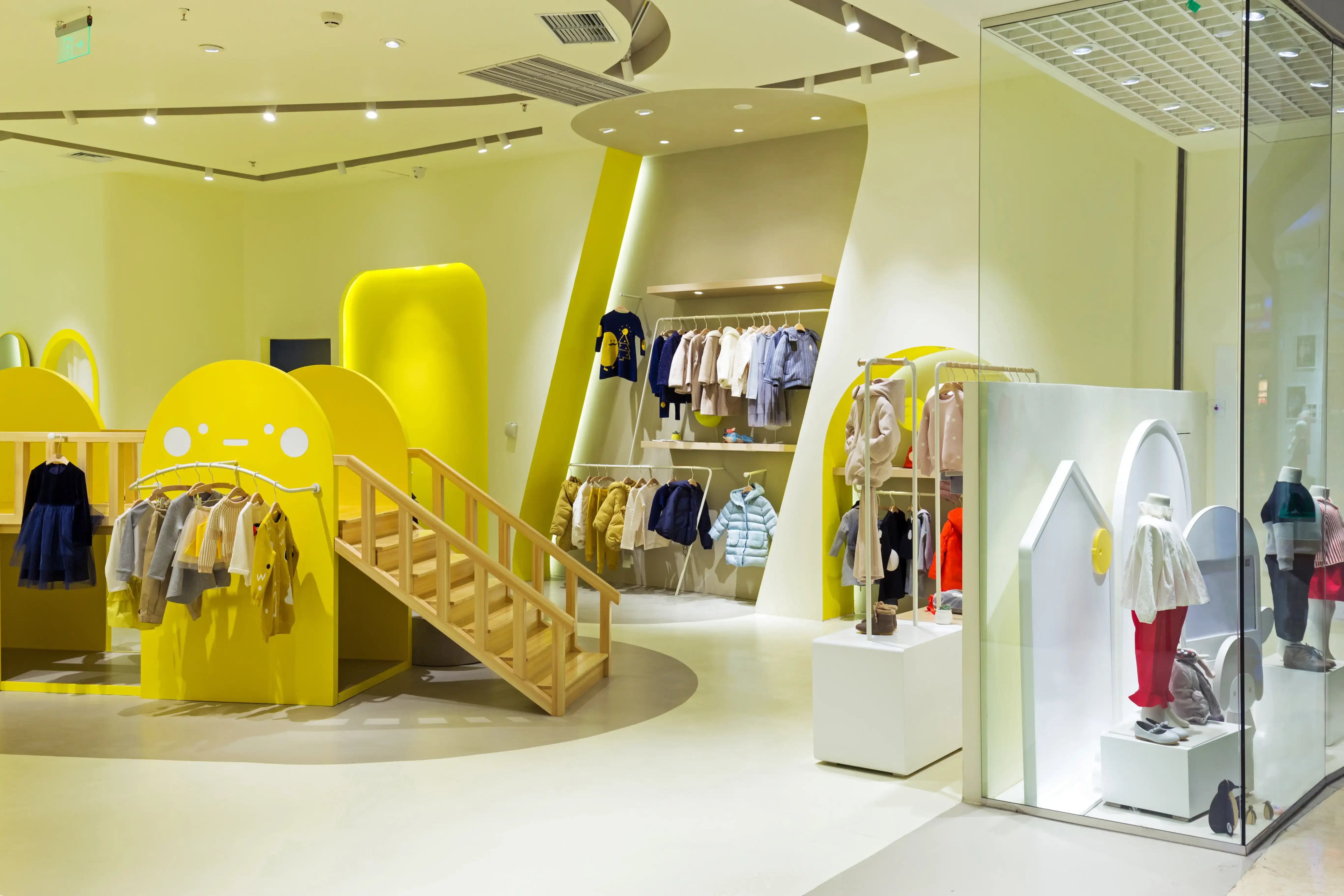
Do you have different store zones with different vibes? Do your stores and footprints have the capacity for different sensory focuses? Music and scent might be different around sporting goods and makeup and perfume. Some areas are better being tech forward, while others benefit from prioritizing biomorphic forms, natural textures and artisanal details that elevate an atmosphere that supports product engagement. This isn’t just aesthetics. It’s retail psychology.
High-level retail designers keep up not only with technology but also environmental/sensory learnings, so they can use scent, sound, touch and lighting to create responsive environments.
Lighting, for example, is both functional and dynamic. You can go as far as to adjust colors throughout the day or in various parts of your stores to match or anticipate customer moods and needs, whether that is energized for a quick discovery or relaxed for an immersive browse.
Upgraded environments that target specific customers also speak to localization and community building. This is about dedicating areas to non-selling activities, from lounge zones to meeting areas for workshops. This could include repair stations and customization bars, where services are sold.
By transforming the store into a meeting place, retailers build loyalty that is rooted in community, culture and scheduled engagement. In many ways, this can be seen as an indirect effort to increase dwell time. It can be hyper-local by design, as a brand’s presence in one neighborhood now reflects that area’s unique rhythm, interests and values, rather than a uniform, one-size-fits-all approach.
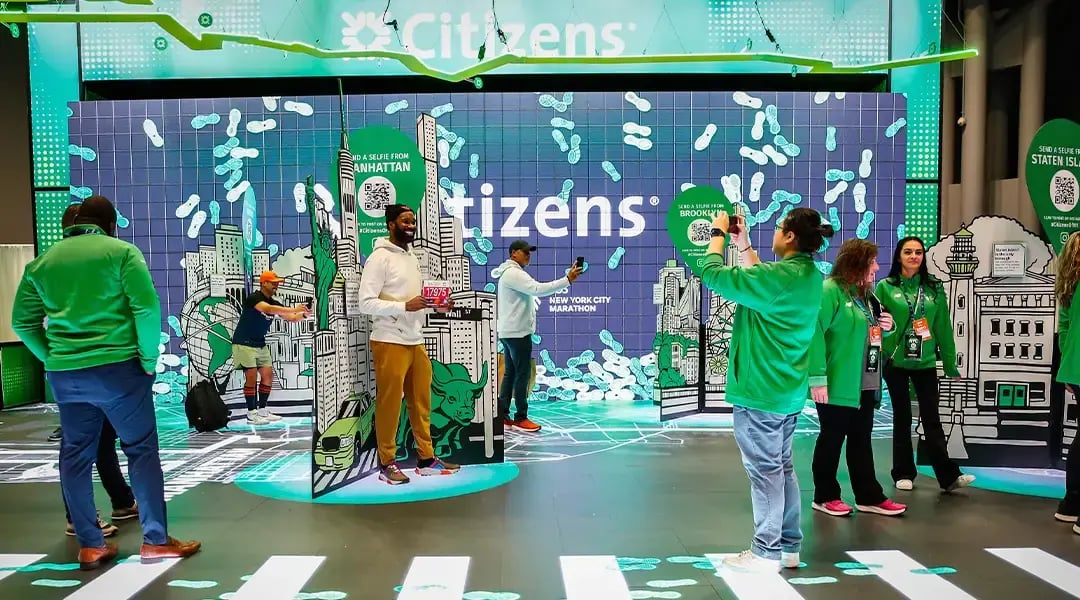 Miller Zell’s experience team envisioned a brand activation that connected bank, city and marathon, one that felt authentic while also being inspiring and exciting.
Bottom line: Meaningful engagement
Experiential retail success is found when your brand’s technology, store design, wayfinding, sensory details, service levels and physical environment align to create moments that feel intentional, ideally supporting all varieties of customers.
It’s not some grandiose undertaking. It’s about connecting customers to an optimized experience, whatever their trip mission. That sort of engagement is meaningful not because it goes viral or solves world problems but because it delivers ROI, increased revenue and beats your competition.