.png?width=170&height=44&name=MillerZell_Outline_Black_NO-Tagline_CLEAN-01%20(1).png "Miller Zell")















Prefer listening? Press play above to listen on the go.
This audio is auto-generated. Please let us know if you have feedback.
Trust in retail is rarely built through a single interaction.
It accumulates, often subtly or even unconsciously, through a wide variety of environmental and experiential cues that tells customers whether your business is credible, competent and worth their time.
Store design is one of the most powerful, misunderstood and underused tools for building that trust.
In this blog, we'll discuss:
1. Design signals expertise before a word is spoken
2. Design your store experience so it’s easy to understand
3. Consistency across locations reinforces credibility
4. Privacy and wayfinding are not competing customer goals
5. Use environmental cues to demonstrate expertise
6. Trust designed into the details
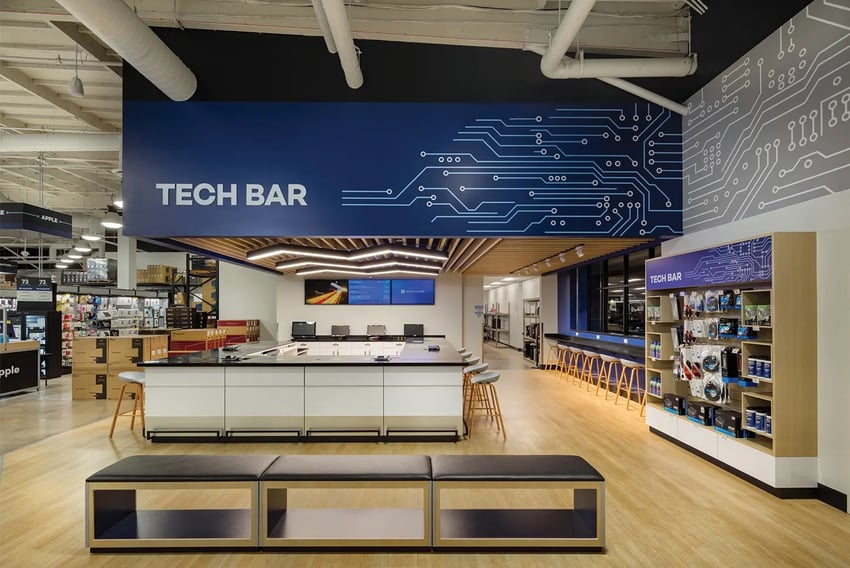
Miller Zell identified ways Micro Center could improve its customer experiences. We optimized space, for inventory, flexible department use and merchandising, creating a strong omnichannel experience.
Design signals expertise before a word is spoken
Do customers understand where to go? Does the space efficiently engage customers on various trip missions? Does the space feel organized? Does the environment provide privacy when needed without making service areas difficult to access?
Strong retail and branded environments design, from concept to completion, answers these and many other questions with a customer-focused approach. It gives shoppers confidence that your brand understands their needs and can deliver on its promises.
Customers make judgments about a business within seconds of entering its space. Materials, lighting, layout, acoustics, décor and messaging all communicate an environment’s quality, competence and care.
Consider a bank branch. Cohesive, dynamic layout, organized workstations and clear sightlines to advisors signal ease, stability and professionalism. Compare that to a cluttered, poorly lit space with dated, mismatched furniture. The products and expertise inside may be mostly identical in concept, but the environment shapes the customer's confidence in that expertise due to positive sensory engagement before any conversation begins.
The same principle applies in specialty retail. A hardware store with organized, labeled aisles and visible, targeted product knowledge stations tells customers the retailer and staff understand the products and can help solve problems. A chaotic layout suggests the opposite, regardless of actual staff expertise.
There also are retail designs that look good on paper and in photos and even during a guided tour, but then they consistently fail over the long haul with the most important audience: customers.
Design your store experience so it’s easy to understand
Confusing environments can create doubt and frustration.
When customers encounter unclear signage, bland or aging displays or competing visual messages, they may question whether the same lack of organization extends to the company’s products and services.
A well-designed environment establishes a clear visual hierarchy. Customers can identify service areas, navigate product categories and locate employees without unnecessary effort.
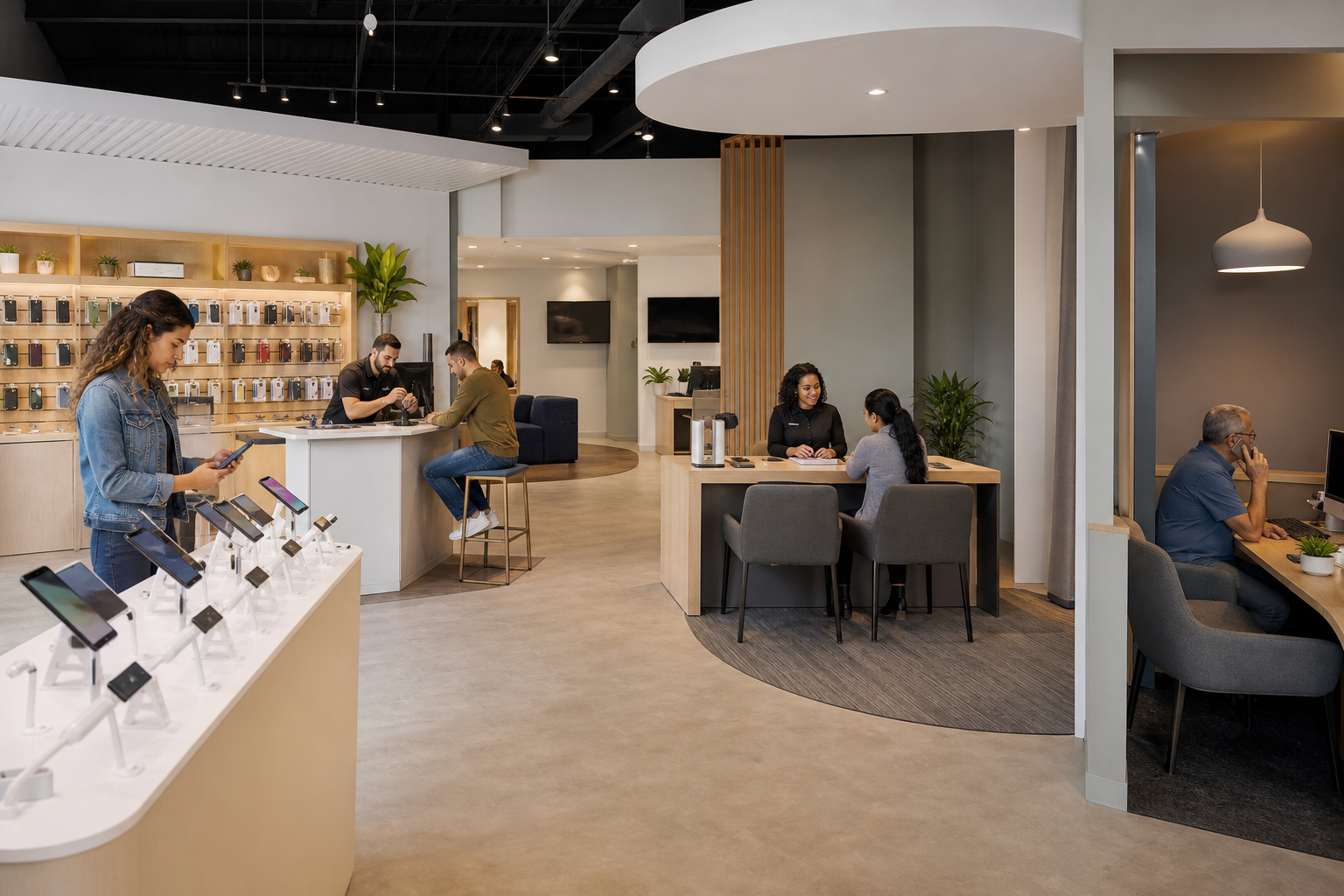
Say you’re a wireless retailer. Customers may visit to browse devices, repair a phone, change a plan or discuss billing. Clearly defined zones help them understand where each interaction occurs. Consistently updated product displays invite exploration while service counters provide a clear destination for customers who need assistance.
That clarity makes your brand appear prepared, professional and focused on customer needs rather than just sales.
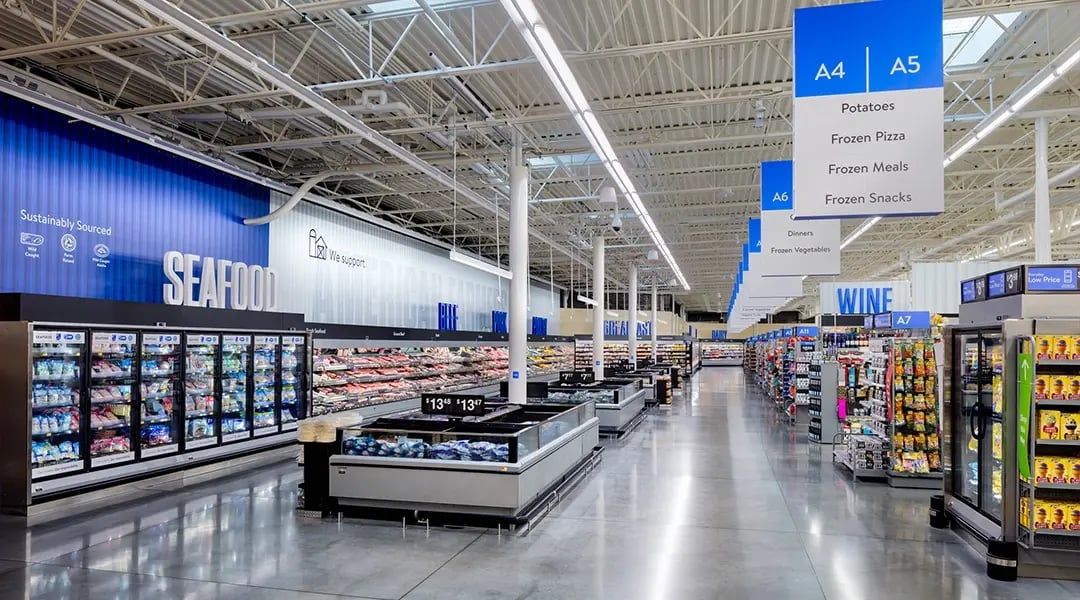
Miller Zell value engineered, adapted and scaled Walmart's new brand signage package to be rolled out to several stores nationwide.
Consistency across locations reinforces credibility
For brands with hundreds or thousands of regional or national locations, trust also depends on consistency, even with a variety of store footprints.
Familiar layouts, colors, materials and service cues reassure returning customers that they can expect the same quality wherever they encounter your brand, whether they are in Manhattan, NY or Manhattan, Kansas.
A customer who has a positive experience at one location should encounter the same quality, layout logic and professionalism at every other location. Inconsistent environments, even when each individual store is well designed, create doubt about whether a brand can be relied upon. This inconsistency also can background the brand itself behind the store products and services, feeding the notion, for example, that all grocery and home improvement stores are the same.
This is why scalable design and branding standards matter as much as the initial design concept. Prototyping for a variety of footprints and creating a brand playbook ensure that your designs and branding guidelines are replicable across hundreds or thousands of locations without losing the details that build trust in the first place.
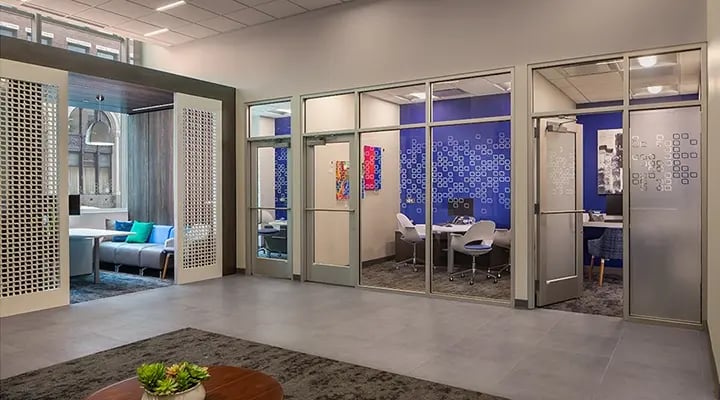
Fifth Third wanted a dynamic, customer-centric banking experience within its refreshed branches, one that is aesthetically pleasing, purposeful and flexible.
Privacy and wayfinding are not competing customer goals
Trust becomes especially important when customers share personal, financial or health information. Customers need to feel they can navigate a space confidently. But they also want to know that certain transactions, such as medical consultations, financial discussions or personal purchases, require discretion and privacy.
Good design solves this through zoning rather than isolation. Banks, pharmacies, optical retailers and wireless providers should fine-tune and simplify privacy features without making customers feel inconvenienced or overwhelmed.
This also applies to retailers leaning into app use, unified commerce and loyalty programs. They want certainty about the security and privacy of online interactions, whether at home or while browsing your branded environment.
“Customers need to feel they can navigate a space confidently. But they also want to know that certain transactions, such as medical consultations, financial discussions or personal purchases, require discretion and privacy.”
A bank, for example, can place enclosed consultation rooms near the primary service area rather than behind a maze of hallways. Frosted glass and acoustic privacy awareness can protect sensitive conversations while maintaining natural light and visual connection to the branch. Clear signs can identify the rooms without advertising why a customer is using one.
The same sorts of design awareness are needed for pharmacies, including acoustic treatments, appropriate spacing and carefully positioned consultation counters that can limit overheard conversations. Customers gain privacy while the pharmacist remains visible and accessible, along with branding that tells customers who is prioritizing them and their wants, needs and ultimate transactional satisfaction.
These design solutions can be tested and improved during an earnest prototyping phase, when banks and retail leaders and their associates can specifically provide knowledgeable feedback that will build design effectiveness, confidence and efficiency during scaled rollouts.
Key point: These design details, when well executed, communicate your brand’s values and care for customers and their privacy. They show that your brand takes customers’ information and comfort seriously, which is the foundation of brand loyalty.
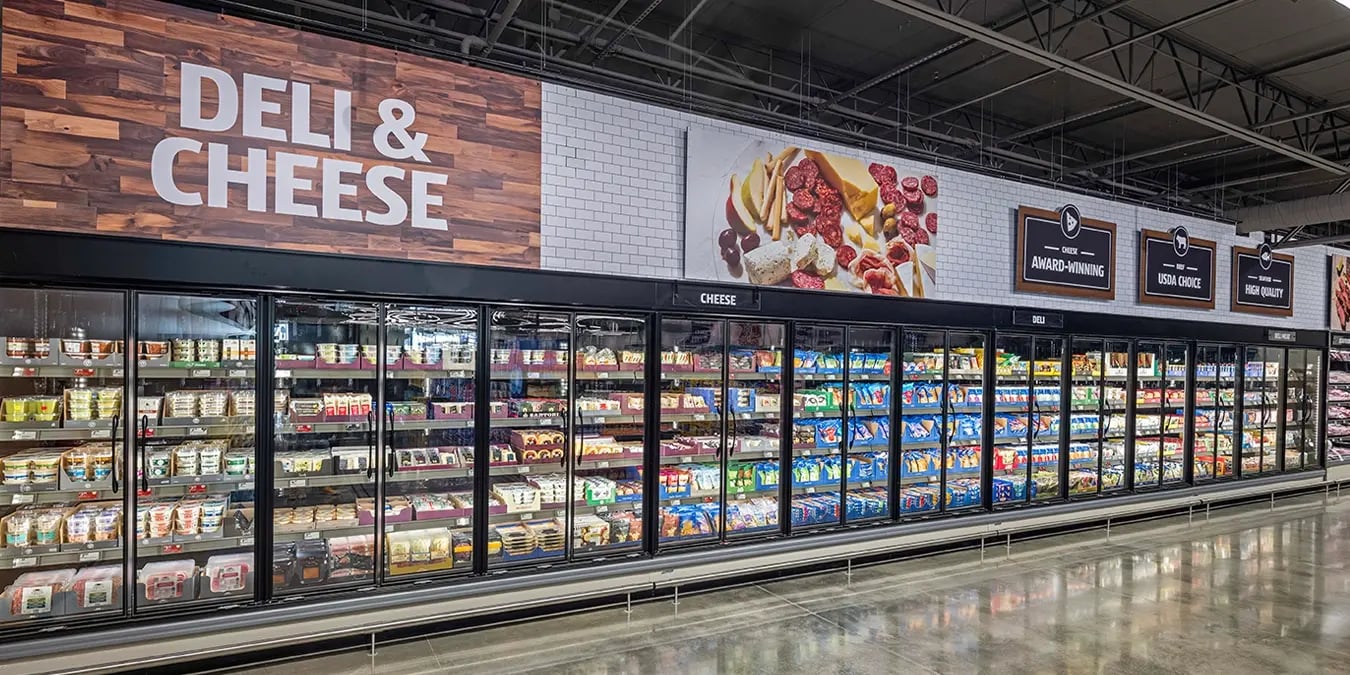
Miller Zell created and adapted a faux wall design, hardware and signage that seamlessly worked in several areas of ALDI.
Use environmental cues to demonstrate expertise
Customers remember how your branded environment made them feel as much or more than the specific transactions they completed.
That’s not about being warm and cuddly. Customers often look to your branded environment for evidence that your company knows what it is doing. Quality materials, thoughtful lighting, organized displays and well-maintained fixtures become signals of credibility.
Details matter, as does a holistic understanding of how store design supports your customers and associates. Consistent signage, clean sightlines, seasonal flexibility and well-maintained fixtures all reinforce the sense that your business is thoughtful and pays attention to detail, which customers extend to their judgment of the products and services offered.
A home improvement showroom can build customer confidence by presenting complete, realistic room settings instead of disconnected product samples. Customers see how materials work together and can imagine the results in their own homes. Integrated digital displays might provide specifications, compare options or show available finishes without overwhelming the space.
“Customers may not understand every repair, but they can see an orderly operation and follow what happens next.”
A grocery store with clearly labeled sections, engaging fresh produce displays and organized shelving signals quality control, extending throughout the operation. A cluttered, poorly restocked store raises doubts, even if the actual products are the same.
An automotive service environment can use visible work areas, clear process signage and digital status updates to make an unfamiliar and sometimes stressful process more transparent. Customers may not understand every repair, but they can see an orderly operation and follow what happens next.
Details? Lighting and ambient music/sounds can play a significant role for many customers. Warm, even lighting and soothing music in a healthcare retail setting can reduce anxiety and suggest care and attentiveness. Harsh fluorescent lighting and only the clatter of people doing their business in the same setting can create discomfort that undermines trust before a single service is delivered.

Trust designed into the details
Retail and other branded business environments are not neutral backdrops. They need to do more than look attractive. They should reduce uncertainty, protect privacy and make expertise visible.
When those qualities are applied consistently across a retail network, design becomes a scalable expression of the brand’s credibility. Customers know where to go, what to expect and how the company will treat them.
That confidence is not created by a logo or hundreds of aisles laden with products. It grows from an environment that works as promised.