.png?width=170&height=44&name=MillerZell_Outline_Black_NO-Tagline_CLEAN-01%20(1).png "Miller Zell")














Press play above to listen on the go.
This audio is auto-generated. Please let us know if you have feedback.
A critical goal during large-scale retail rollouts is optimized speed to market.
Every retailer with hundreds or thousands of locations wants to execute store refreshes and upgrades efficiently and with minimal disruptions. They want their right-now solutions for store development adopted as close to right now as possible.
But truly achieving high-quality, speed-to-market results is not just about moving fast. It’s about reducing uncertainty. With expertise honed by holistic understanding of a proven system, you align teams at the beginning and build a rollout plan that can withstand real-world complexity, executing at scale for a diversity of regions and footprints.
And you treat that process as a capability to refine continually, not as a one-time project plan.
1. What slows retail rollouts?
2. Align earlier. Execute more smartly.
3. Prototyping that anticipates potential issues
4. Build, maintain and evolve a rollout process that can withstand real-world challenges
5. Retail rollouts as a repeatable process that improves itself
What slows retail rollouts?
- Are design decisions fully resolved?
- Is program management clearly established as the communication center?
- Can the fixtures be manufactured at the required volume?
- Are specified materials available in every market?
- Does the design work in smaller, older or nonstandard locations?
- Are permits, landlord approvals and local codes likely to affect the schedule?
- Are the technology solutions fully defined and tested?
- What are the specifics of localization efforts?
- Are installation schedules aligned with store operations?
- Do operations teams understand how the new environment will function day to day?
Each of these issues may be manageable on its own. But large-scale programs rarely get derailed by a single issue. More often, delays accumulate through a series of smaller disconnects. Across hundreds or thousands of stores, small uncertainties multiply quickly, creating stress for all stakeholders, including your customers and associates.
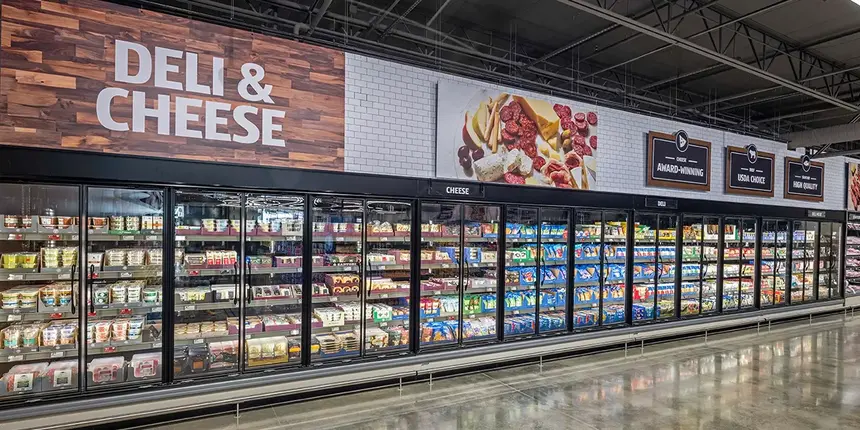 Miller Zell created and adapted a faux wall design, hardware and signage that seamlessly worked in several areas of ALDI stores.
Align earlier. Execute more smartly.
The answer isn’t simply adding more people or pushing every team to work faster. It’s about creating and maintaining alignment before the rollout reaches the point where changes become expensive and adoption slow and potentially contentious.
That means bringing the right stakeholders together early to establish clear expectations and identify potential obstacles. This includes branding/marketing, design, construction, procurement, operations, real estate, supply chain and installation teams.
A successful rollout plan should answer critical questions before they become rollout problems:
- What are the different store conditions and formats?
- Is there a branding playbook to ensure storewide consistency?
- Which elements can be standardized and where is flexibility required?
- Are materials, fixtures and signage available at the required volume?
- How will products and components be kit packed, shipped and tracked?
- How will installation be coordinated around store operations?
- Who owns decisions when something changes?
The objective is not to eliminate every variable. It’s to understand the variables well enough to build a process that can absorb them and continue forward with precision and efficiency.
Prototyping that anticipates potential issues
The store prototyping process is a valuable risk-reduction tool in a large rollout, but only if it is tested under realistic conditions.
Prototyping shouldn’t feel like vendor or design celebration. It provides opportunities to make adjustments and to build confidence. You secure alignment going forward with a teamwide understanding of executing at scale for diverse footprints.
Sure, a flagship location can look immaculate, tech-forward and impressive. But how does your prototyping process present necessary design and execution variations for, say, a tight urban footprint, an aging suburban store or a leased location with restricted work hours?
A useful prototyping process tests more than appearance. It confirms that the environment can be built, stocked, maintained and operated at scale. It also gives retailers an opportunity to gather input from store associates, installers, customers and operations leaders before small issues become costly systemwide problems.
For example, a redesigned checkout may improve the visual presentation of a store but also create unanticipated congestion during busy periods. Testing it during actual operating hours can reveal whether the layout supports customer flow, associate movement and loss-prevention requirements.
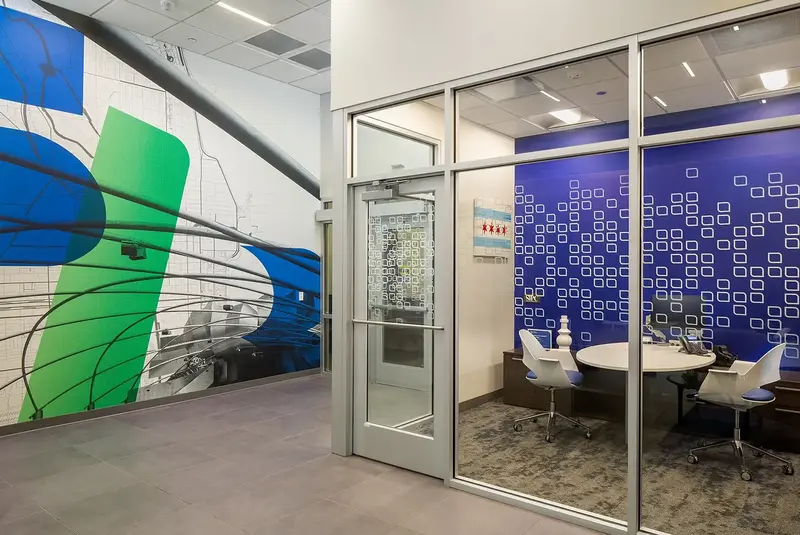
Fifth Third wanted a dynamic, customer-centric banking experience within its refreshed branches, one that is aesthetically pleasing, purposeful and flexible. Whether it’s digital displays or wall vinyl or lighting, our program management maintains end-to-end efficiency and transparency until installation is complete.
Build, maintain and evolve a rollout process that can withstand real-world challenges
Retail rollouts often begin with broad alignment and then lose momentum as teams work separately. Or butt heads when they don’t.
Brand leaders focus on the customer experience. Procurement oversees cost and availability. Installation teams manage schedules. Operations focuses on disruption to stores. Each perspective is valid, but disconnects between them create potential conflict and risk.
Strong rollout programs establish a shared view of what success looks like: on-brand execution, manageable store disruption, reliable supply, field-ready instructions and an opening date that means something operationally.
That alignment should be reinforced through clear governance, regular reporting and quick but organized management of unresolved issues. Leadership needs visibility into schedule, budget and recurring problems. Vendors need to receive specifications, time frames and forecasts early enough to plan for capacity. Installation teams need accurate, practical instructions.
Rollout planning and processes account for supply chain disruptions, regional differences, existing store conditions, labor availability, permitting, vendor coordination, installation sequencing and the unexpected issues that inevitably surface in the field.
Logistics technology can maintain visibility, but process discipline is equally important. Clear documentation, standardized specifications, accurate store data, rigorous quality control and real-time communication create the foundation for consistent execution.
And a complete understanding of these precede rollout because they ensure optimized speed to market.
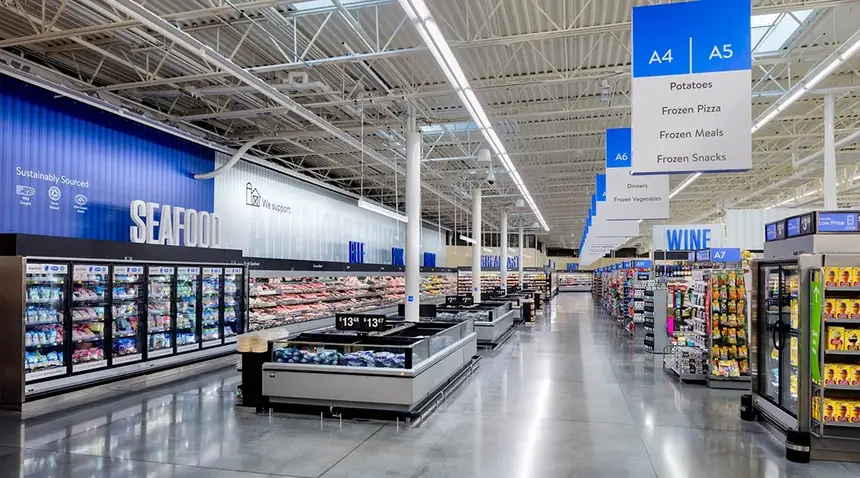 Miller Zell value engineered, adapted and scaled Walmart's new brand signage package to be rolled out to stores nationwide.
Retail rollouts as a repeatable process that improves itself.
Even the best rollout plan will encounter unexpected issues that require adjustments and problem solving. It’s impossible to be perfect. But fundamental to an optimized speed-to-market process is a rollout model that can efficiently manage unanticipated issues and provide valuable learnings for the next program.
Those are specific benefits of disciplined planning, adaptable standards and a willingness to learn from every wave of work. Retailers should track the issues that slow projects down, identify their root causes and use that information to improve the next phase.
For a multi-store refresh, optimized speed to market is not a race. It is the result of fewer unknowns, earlier alignment and a rollout process built to perform under real conditions.
Retailers that develop this capability can open, refresh and evolve their environments with greater confidence and far less disruption.
The goal isn’t simply to accelerate the rollout. It’s to build a rollout engine that gets better every time it runs.