.png?width=170&height=44&name=MillerZell_Outline_Black_NO-Tagline_CLEAN-01%20(1).png "Miller Zell")














Prefer listening? Press play above to listen on the go.
This audio is auto-generated. Please let us know if you have feedback.
Opening new retail locations has long been the best way to expand market share, increase revenue and grow brand presence. Store count remains a good measure of retail strength.
Yet today many retailers are shifting their investment priorities. With national retail vacancy rates near historic lows, and construction costs remaining high due to inflation, retailers are directing more focus toward upgrading existing locations rather than new store openings.
The reasoning is straightforward. Renovating existing, proven locations provides a more predictable ROI than the high-risk, high-cost endeavor of establishing new sites in a challenging real estate market.
So how do you maximize the value of existing stores for today’s retail environment?
1. Economics of refreshing vs. building new locations
2. Retail upgrades supported by store location
3. Intertwining brand experience and environmental flexibility
4. Upgrading your brand, stores and customer experience
Economics of refreshing vs. building new locations
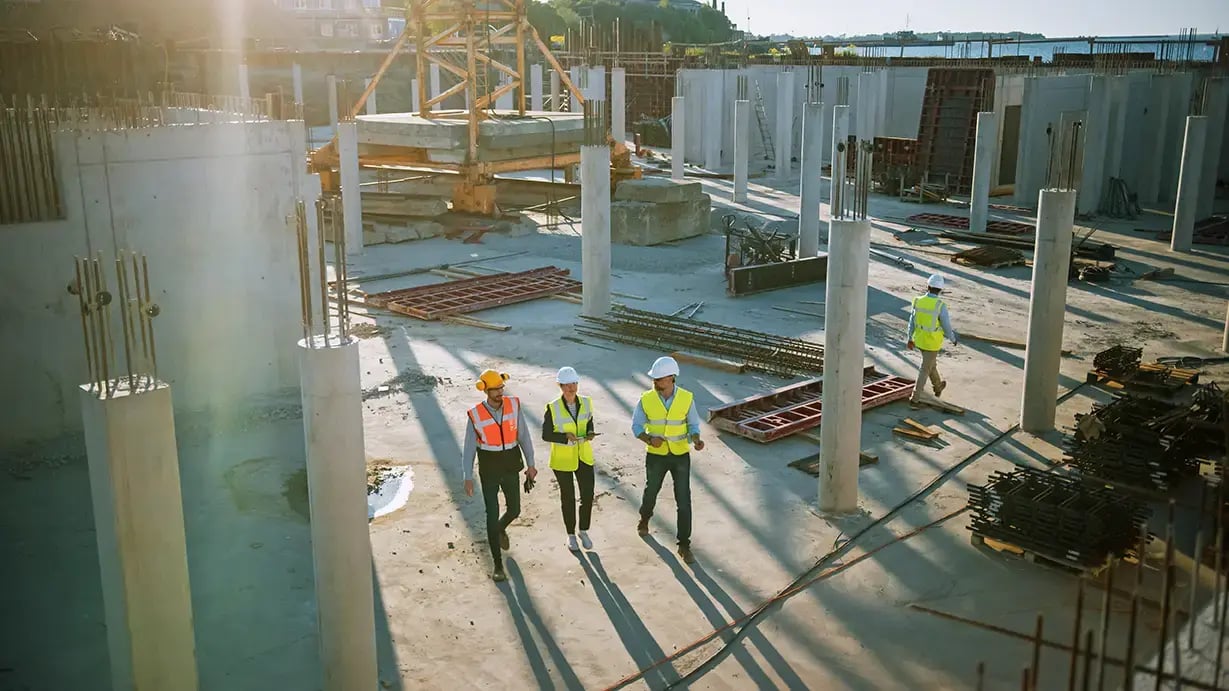
Building new stores is expensive and complicated: real estate and construction costs, labor expenses, permitting requirements, supply chain issues and vendor management, etc. Delays and timeline uncertainty also create variables often at odds with budgets.
But it’s not just about the expenses and challenges of new builds. Even if you hit budgets and timelines, new locations upon opening need to build a customer base from zero. This often starts with attracting customers from your other locations, not necessarily a net positive. The average revenue per square foot for a new store is typically lower in its early years than an established location with embedded loyalty and traffic patterns.
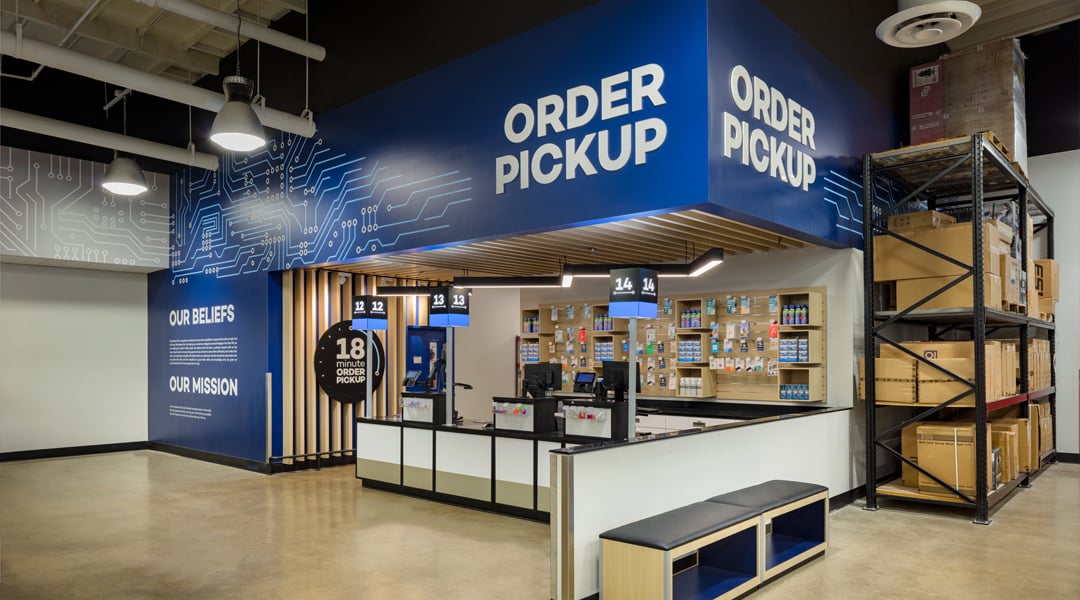 Micro Center saw same-store sales rise by as much as 10 percent each month since installation. It continues to outperform other stores by 15 to 20 percent. Micro Center intends to expand over the next several years in new markets and will apply this redesign to them.
Of course, brand strength and momentum can overcome that, with your brand advocates applauding your new stores on social media and even the professional news media joining the celebration. Micro Center is a good example of a superior brand with outstanding store-planning capabilities, which support big wins for new stores and refreshed stores.
Still, existing stores already carry many valuable assets, including a known customer base, an established community business presence, a trained workforce and amortized real estate infrastructure. Investing in those stores produces returns on a foundation that a new build cannot replicate for at least a few years.
The risk-factor math, at present, favors reinvestment over expansion.
Retail upgrades supported by store location
More than a few retailers have pursued a “prune and polish” strategy over the past decade-plus, which leans into closing underperforming locations while expanding the capabilities and upgrading in-store environments for high-performance stores.
Of course, a refresh of a prime location store isn’t just about new carpet, bigger LED screens and fresh paint. It’s about using targeted store data and customer and associate feedback to understand specific priorities for a remodel program.
Shopping behaviors evolve, and stores must design for that evolution with environments that meet all customers and their diverse shopping needs, from urgent shoppers craving zero-friction convenience to browsers looking for surprise and delight.
Moreover, a smaller, high-performance store in a downtown area likely serves different customer wants and needs than a large, high-performance exurban location.
“It’s not about technology installed just for something new and cool. It’s about technology that upgrades customer experiences and convenience as well as back-of-the-house operations and associate experiences.”
True retail upgrades are about identifying high-impact investments for specific location needs that deliver measurable returns and operational improvement. Updates that are targeted for specific locations can enhance customer experiences, perceptions and engagement.
Store refreshes that improve wayfinding, optimize traffic flow, modernize checkout experiences and simplify product discovery can significantly boost customer satisfaction while increasing operational efficiency.
Further, the role of your physical stores has evolved beyond simply being points of sale. Many of your stores now function as fulfillment centers, pickup locations, return hubs and customer service centers. Your existing locations often require redesigns to support omnichannel capabilities such as BOPIS, curbside pickup, ship-from-store and same-day delivery programs.
These efforts frequently generate greater returns than opening additional stores. Holistically conceived refreshes work because of a strategic focus rather than using cookie-cutter solutions. It’s not about technology installed just for something new and cool. It’s about technology that upgrades customer experiences and convenience as well as back-of-the-house operations and associate experiences. This includes strategically adopted digital signage, mobile-enabled experiences, inventory visibility tools, electronic shelf labels and data collection capabilities.
As customers increasingly value speed, ease and efficiency alongside price, these upgrades can become competitive differentiators.
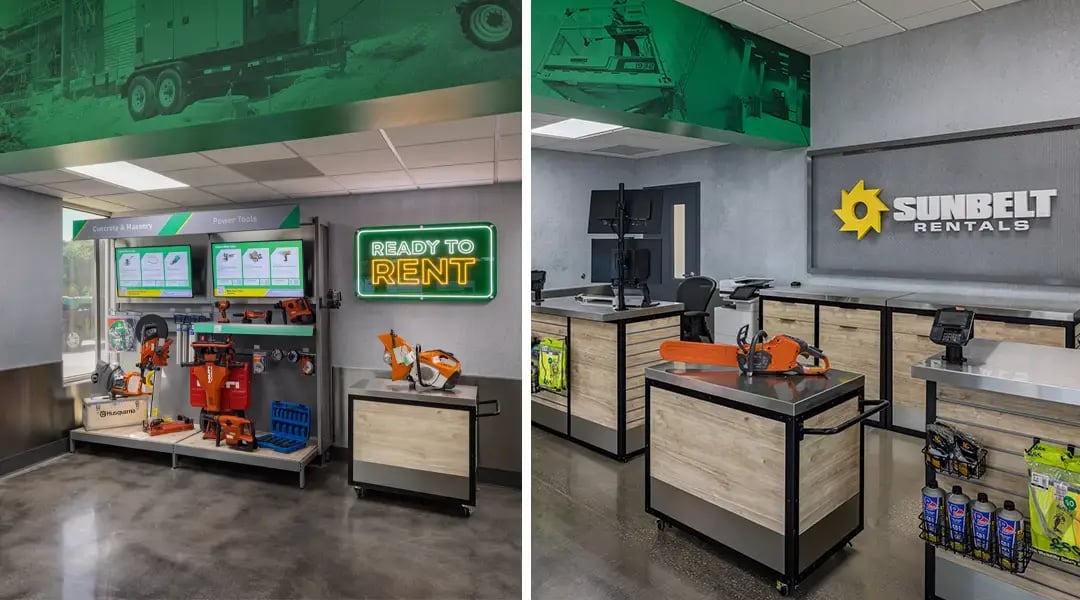
Sunbelt Rentals' strategic layout and tool assortment helps renters quickly locate and learn about the options for their project needs. A moveable demo station enables associates to help renters select the best tools while also learning about operation and safety features.
Intertwining brand experience and environmental flexibility
A well-executed store refresh also leans into consistency and flexibility.
Your stores need to be brand consistent across every store and omnichannel customer experience touchpoint. And your store environments should include a design intent that provides a built-in flexibility that can evolve at pace with your customers’ changing wants and needs.
There’s a critical psychology to retailers meshing together branding consistency with great experiences. Successful store investment upgrades the customer experience, which builds brand engagement and loyalty. This means your brand name and/or logo builds an emotional and intellectual connection within customers, who both specifically seek out your stores and engage with them on a deeper level.
This deeper engagement then allows you to see what’s next. Your brand’s strong relationship with customers makes it easier to see how they evolve and how your next store refresh evolves with them. If your store design includes an expectation of this evolution with flexibility and zoned modularity, you can more quickly and efficiently make upgrades in years to come.
In the bigger picture, your capital expenditures for this store refresh support long-term growth objectives as you extend the life cycle of store environments through strategic and consistent modernization. This built-in efficiency increases ROI beyond sales and operations.
For example, store areas earmarked for localization can be increased or even decreased based on population shifts, customer reactions and developments within the local culture. Your pro or college team wins a championship? A local actor, filmmaker or writer wins a major award? Your community celebrates a historical milestone? A local product becomes a national hit? Each can be efficiently acknowledged and included in your store décor with positive associations with your brand.
Upgrading your brand, stores and customer experience
Ultimately, this is about retailers strategically analyzing their store fleet not as fixed assets to maintain but as branded experiences to optimize continually.
By embracing remodels, format refinements, operational upgrades and customer experience enhancements, you can avoid the expense, complexity and uncertainty of new builds.
In today’s retail landscape, growth is no longer defined solely by adding locations. It is increasingly defined by extracting greater value from the stores already in place. The retailers that succeed will be those who continually adapt their existing assets to meet changing customer expectations while maximizing efficiency, engagement and long-term return on investment.