.png?width=170&height=44&name=MillerZell_Outline_Black_NO-Tagline_CLEAN-01%20(1).png "Miller Zell")













Retailers want to create meaningful differentiation with their competitors beyond price, product and convenience. So, consider a holistic approach that leans into “emotional design.”
When strategically developed and executed, emotional design shapes how customers feel inside retail and other branded spaces. Yes, your stores start with fostering efficiency so shoppers can easily complete their trip missions, but integrating design features that touch emotions directly influence brand perception, dwell time and conversion.
Here’s how to approach retail design so that it connects with your customers’ emotions, not as sentimental gestures but as outputs from your creative pragmatism that can inspire, comfort and energize.
In this blog, we'll discuss:
1. Retail design that offers customers comfort and escape
2. Don't roll your eyes when retail designers talk about "storytelling"
3. Designing retail for pause, play and share
4. Emotional design is about paying attention and caring
Retail design that offers customers comfort and escape
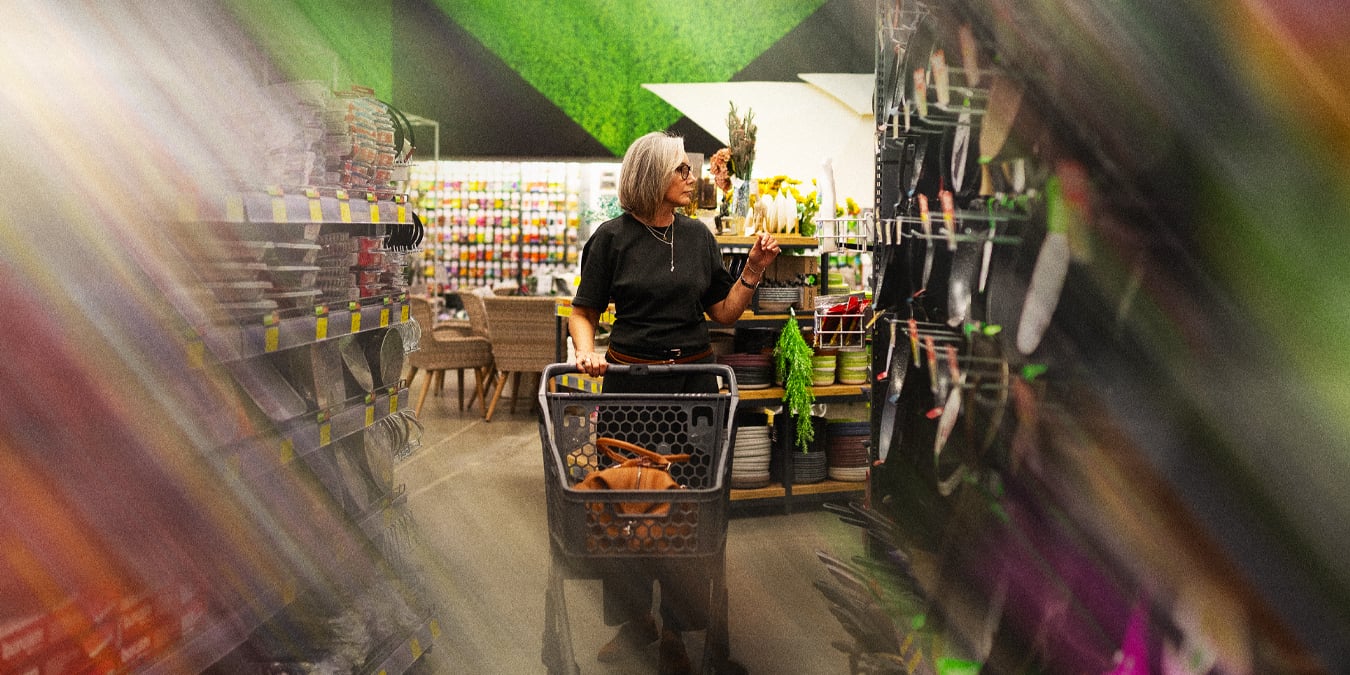
Retailer designers should seek to spark two responses for customers upon store entry: comfort and then escape.
First, customers want support for their trip missions. This is the comforting atmosphere of knowing the shopping purpose will be fulfilled as efficiently as the customer wants it to be. Wayfinding clarity tells customers in a rush they will get what they want, whether that’s dog food, dinner or a new laptop. This reduces cognitive stress with intuitive navigation, such as color coding, clear signage and visual anchors that help shoppers immediately feel oriented and in control.
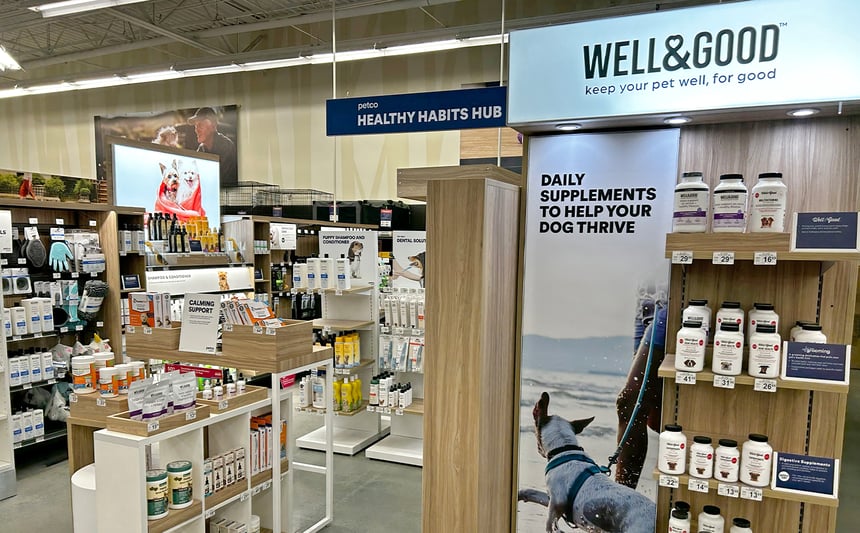
Signage and displays that engage at the Petco Healthy Habits Hub.
The customer now trusts your store to provide what they need. With that fulfilled, the shopper can decompress and look around and perhaps consider some exploration. Those same wayfinding clues that drive shopping clarity also can spur curiosity.
This isn’t about cue overloads or about bright lights, loud music and wide-eyed store greeters. It’s about customers feeling like they will easily get what they need from your store, so they can consider products that are more fun than necessary.
Don’t roll your eyes when retail designers talk about “storytelling”
We get it. Your stores need a refresh, and you’ve got budgets and deadlines and practical needs for efficiency and clarity while you’re still vaguely haunted by tariff uncertainty. Your AI interaction on retail store design said, “Inspire through narrative and identity” and “Inspiration drives aspiration.”
Ah... sure? But what about POS, BOPIS, checkout, modular fixtures and upgraded digital integration?
Think of retail design storytelling as a fancy way of describing customer communication. “Curated vignettes” for retail are about placing products into lifestyle contexts so customers sense potential for adding value into their lives via purchases.
Say your customer is thinking about upgrading their kitchen or buying a new winter coat. You then provide messaging and content that supports an authentic narrative that justifies the spend.
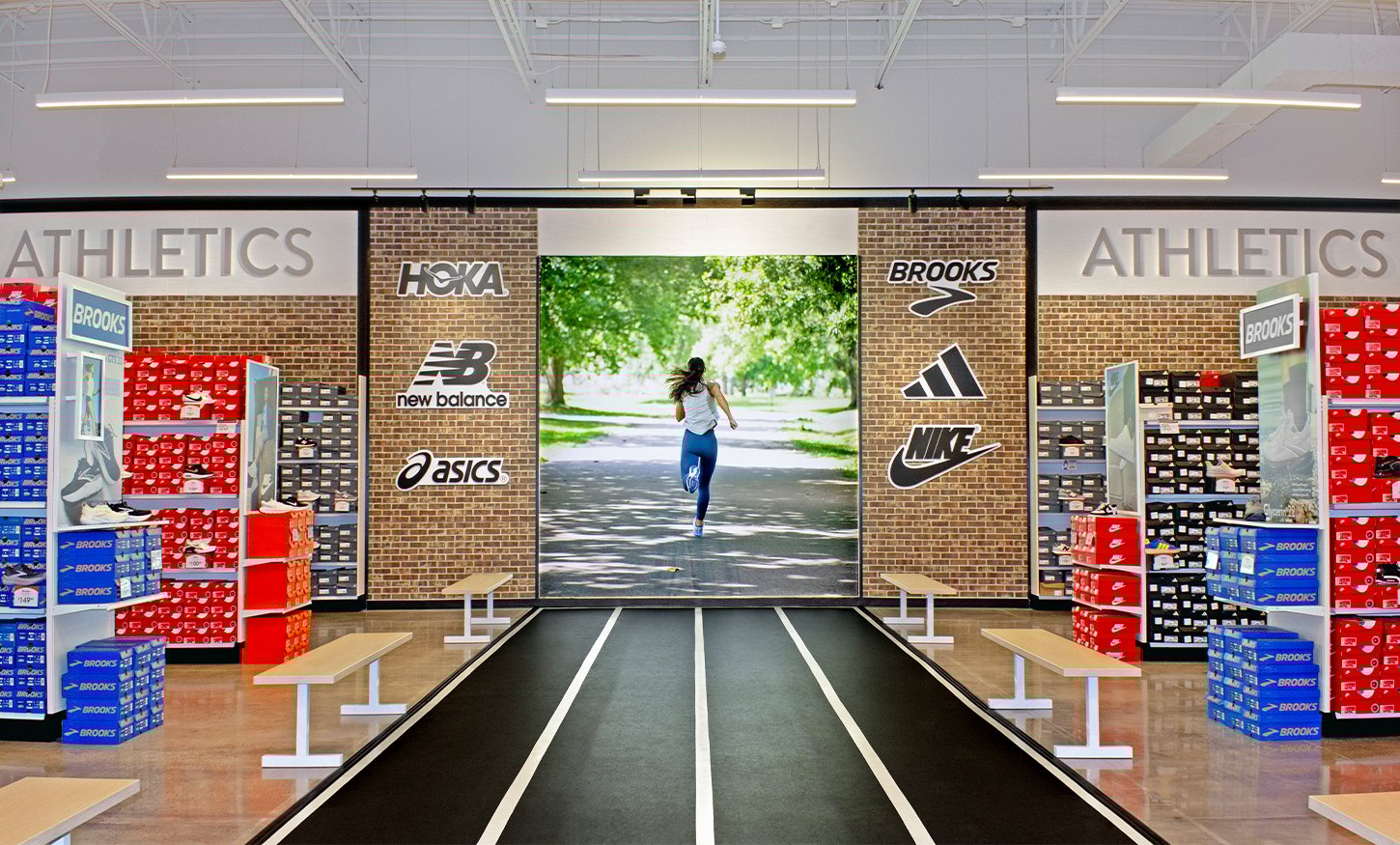
Miller Zell provided Shoe Station SEG's to faux brick to laminate paneling that improved aesthetics and functionality, as well as installation solutions that saved time and money.
Your storytelling can be about adding something entirely new to customers’ lives and them experiencing immediate rewards. Or it can be about better quality and craftsmanship than the product they currently own or frequently buy. Or it can celebrate a product that’s transitioned toward sustainability. Or it can be, yes, purely aspirational in a fun way, even though it’s unlikely your 40-year-old self will become the new Anthony Edwards just because you purchased similar sneakers.
Storytelling in retail design is about knowing your customer and understanding not just what they need but also why they need it. You engage and connect within this relationship.
Of course, your primary purpose is securing the sale. But it’s also about ensuring the customer is happy during and after the purchase and your brand is intertwined with that positive experience.
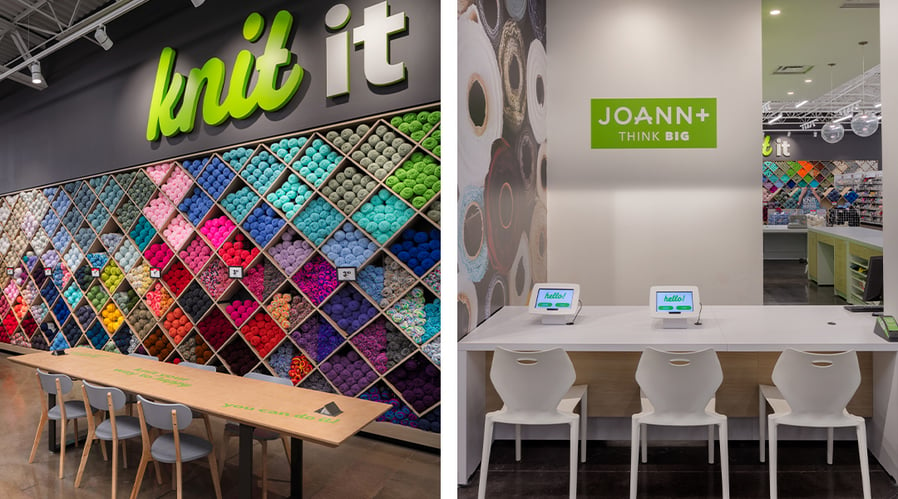
Joann wanted tables throughout its store where customers could work on their crafts. Miller Zell engineered the tables to weigh less than the original design.
Designing retail for pause, play and share
Brand loyalty develops because you give your customers more than your competition, so they return.
Some design items are comfort amenities, large and small. Your restrooms are meticulously maintained and ideal for parents with young children. You offer phone charging or free water. Or comfortable seating areas could morph and expand into a café where coffee, snacks or even meals and cocktails are available.
This connects with creating hybrid zones or true “third-place hubs” supported by modular store systems that are flexible and support seasonal changes. Regularly refreshing key zones creates a sense of novelty and relevance, signaling that something new is always happening.
Miller Zell identified ways Micro Center could improve its customer experience. We optimized space, for inventory, flexible department use and merchandising, creating a strong omnichannel experience.
Adaptable spaces can serve testing/temporary purposes or non-selling activities. Think local events, product showcases, targeted engagement for children, alternative checkout areas, product-use classes, repair stations or maker studios.
Integrating emotional design into your stores isn’t about small afterthought spaces. It’s about flexibility and experimentation that could become loyalty engines that turn foot traffic into engaged brand advocates.
Emotional design is about paying attention. And caring.
Good retail designers pay attention to trends, social media, technological advances and data analysis. Sometimes seemingly great ideas don’t work. Or they don’t work until they do. Or design details yield unexpected results, both positive and negative.
Good retail designers also listen. And not just to you and your customers. Your store associates interact with customers every day and often can tell you what works and what makes their work easier.
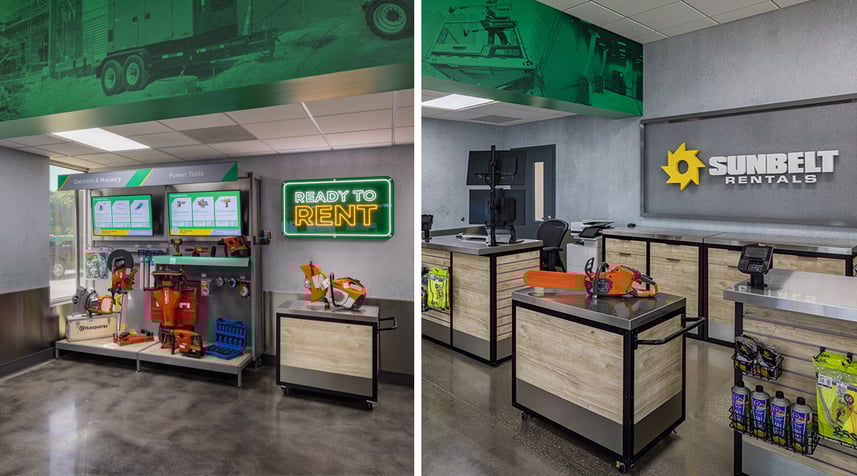
Miller Zell utilized Sunbelt Rentals branding to expand seasonal merchandise selection. A moveable demo station enables associates to help renters select the best tools while also learning about operation and safety features.
Perhaps a new, interactive seasonal display is really cool and engaging, but it creates a bottleneck when you position it too close to entry. New layered mood lighting might seem engaging from a distance, but it can foster visual fatigue when customers are donning reading glasses or needing to use their smartphone lights to figure out what’s going on.
Emotions are complex, as is the customer experience. Your shoppers appreciate you providing efficiency and convenience and presenting new experiences. They also appreciate when you pay attention and try to improve experiences.
Emotional retail design is about authentic impact, creating moments customers want to return to and share by word of mouth.
You provide the functional and purposeful elements that allow customers to complete their trip missions, but you also tailor your shopping experiences so customers feel seen, valued and moved by your environment, which elevates your brand’s standing in a competitive marketplace.