.png?width=170&height=44&name=MillerZell_Outline_Black_NO-Tagline_CLEAN-01%20(1).png "Miller Zell")














Prefer listening? Press play above to listen on the go.
This audio is auto-generated. Please let us know if you have feedback.
What makes a retail design great?
It’s an interesting question, and it fuels an energetic and engaging debate. But the foundational reality of a successful or even great retail design is simple: Without great execution, there is no great retail design.
The complex pathway between concept and rollout is where brands typically lose store development momentum. Misalignment between strategy, creative, engineering, production, logistics, installation and follow-up introduces friction that erodes consistency, speed and brand equity. And then ROI and business growth.
Further, inconsistency compounds at scale. Small execution breakdowns — uneven installs, material substitutions, delayed logistics — become amplified across multi-location networks.
So, let’s consider the potential challenges for precisely executing a retail rollout and ways to avoid or overcome them.
In this blog, we'll discuss:
1. Design & execution: Begin with the end in mind
3. Standardize, customize, localize: Kit packing is never an afterthought
4. Logistics & execution? Lots of challenges but no excuses
Design & execution: Begin with the end in mind
Did your design start with a strategic review of your store fleet? You want to say, “Of course!” but, well, maybe it only sorta did. Or not really.
Again, fancy drawings look cool, but do they solve real problems and improve your store experience, no matter the location or footprint?
Before you begin design work, it’s important to challenge your goals and potential solutions with granular analysis. This starts with conducting a thorough, boots-on-the-ground review of your current spaces, identifying areas that need improvement and how different footprints and different regions often have different needs.
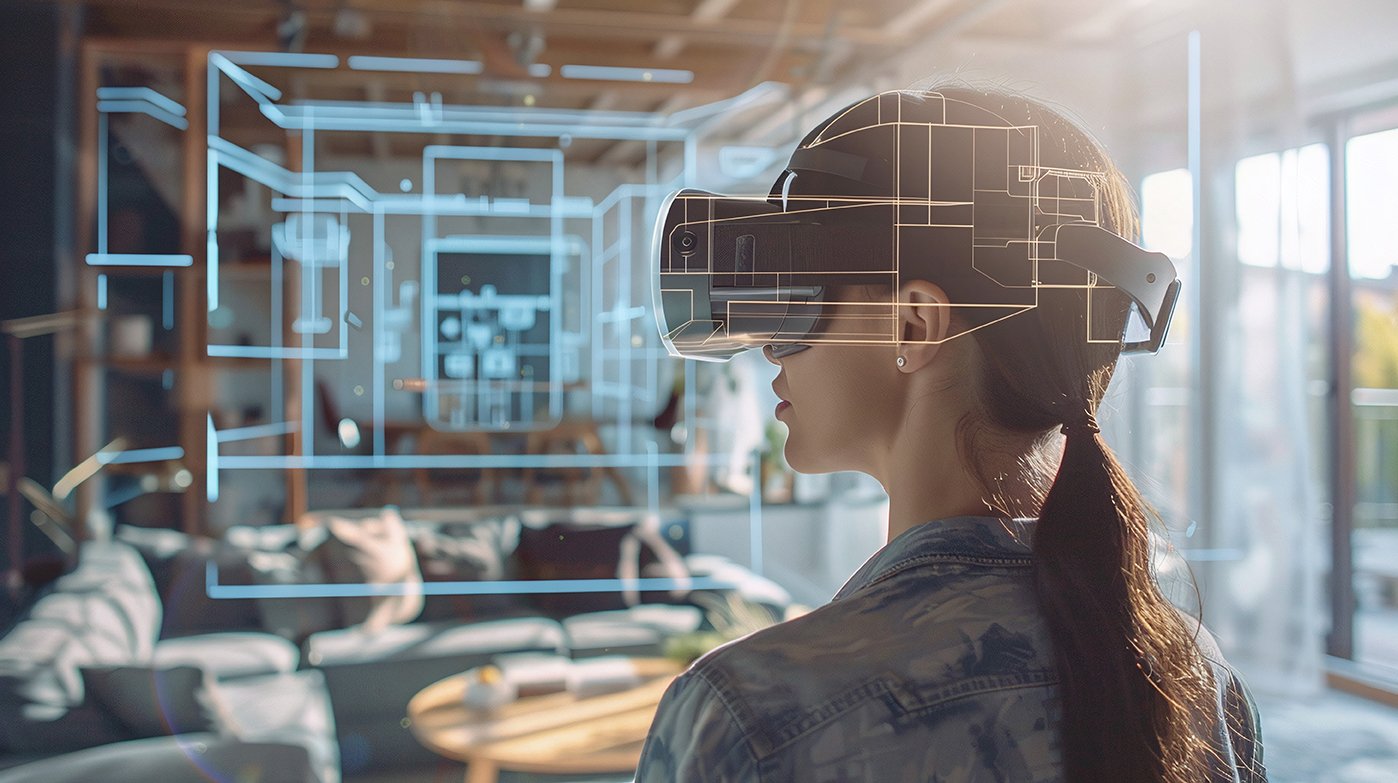
Even before design, you should take note of process details, such as legacy infrastructure, permitting and lease issues, electrical and mobile network quality.
This also includes gathering input from customers and staff and analyzing sales and survey data. Don’t underestimate associate input, as making their jobs easier and more rewarding boosts your brand and directly connects to customer experiences.
The connection to execution and rollout success is that a holistic and strategic store review establishes an official “why?” for each redesign goal that can be communicated to the diverse stakeholders in the process, including your marketing, real estate and operations teams, as well as outside vendors.
Speed requires structure
Branding and operational consistency are the fruits of a transparent and detailed understanding of rollout process.
If you haven’t already, create a brand playbook that sets standards and an all-encompassing visual language, including logos, colors, fonts, images, primary and secondary slogans and verbiage. This ensures brand-right consistency, no matter store-to-store differences.
Retail rollouts involve many moving parts, and managing those moving parts requires knowledge and expertise, as well as great communication. Ideally, your plan includes experienced program management that leans into a single point of contact who can provide end-to-end updates, troubleshooting and solutions. This also fosters a problem-solving chain of command, from installers to install managers to project managers, who then know where to take issues to deliver precise and efficient solutions.
Details matter. Here are some to monitor with your rollout program:
- Be informed and aware of the whole cost from design through installation, including lead times for fixtures, millwork and digital hardware.
- Understand the ideal material selections, fixture assembly methods and end-user ergonomics that best suit your environments, on-site resources and budget.
- Insist on seeing and experiencing prototypes so you can give feedback before moving to procurement, production and adoption at scale.
- Ensure all vendor partners, GCs and installation teams understand their instructions and job parameters so there’s no room for misinterpretation or miscommunication.
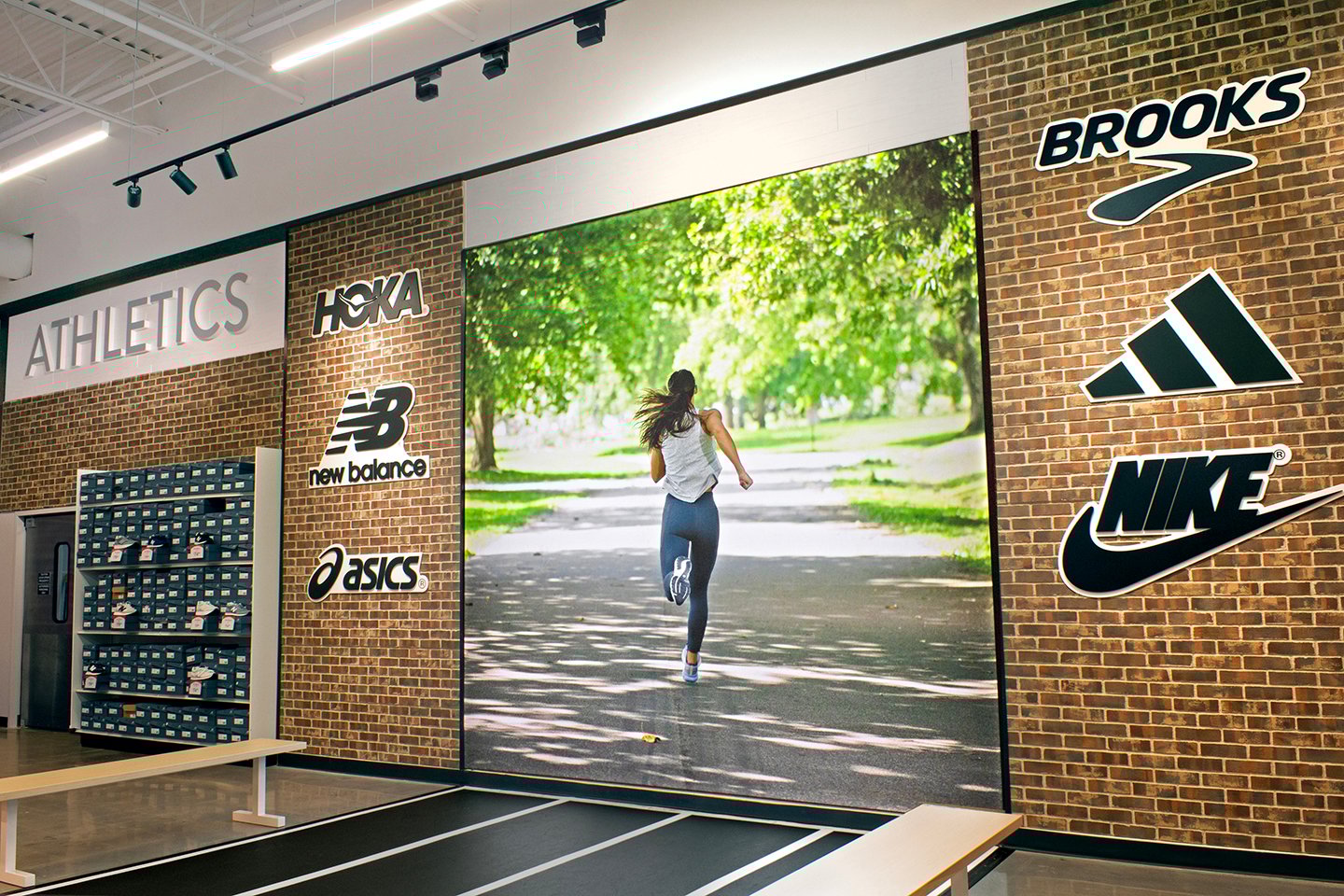
Customer response and business results during market testing of a remodel program revealed an ambitious long-term strategy to re-banner and scale Shoe Station stores
Whenever possible, start with a pilot program. Auditing pilot stores often leads to valuable learnings that help streamline installation and ease of build. Understanding an exacting process beforehand, which includes learnings and implementation flexibility, ensures that ISDs (in-store dates) are met, and quality is maintained across multiple sites.
Maintaining high standards, overcoming unexpected challenges and minimizing downtime are integral parts of the rollout process. Successful rollouts rely on standardized programs and centralized vendor management, ensuring every partner is working from the same playbook.
Standardize, customize, localize: Kit packing is never an afterthought
When rolling out to multiple locations and footprints, develop a strategic kit-packing plan for fixtures and décor elements, aiming for ease of build and minimized shipping costs.
This not only considers the installation process for multi-site rebranding, but it also plans for how kit-packed boxes will be organized in delivery trucks and how and when they will be transferred into stores. This increases efficiency and saves time and costs for complex projects.
Smart kit packing also serves regional and footprint needs, with these needs specifically accounted for during design development, such as how you provide designated spaces for localization for each town or region. Make this clear in both the packing and installation instructions.
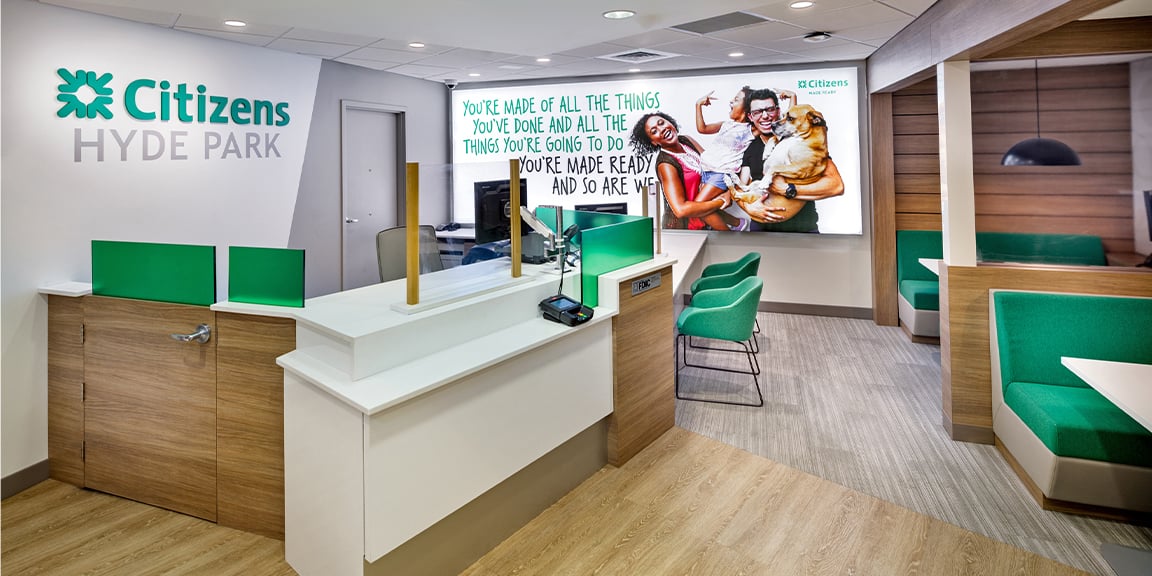
Inviting and transactional: Activating the back wall with an illuminated graphic creates a powerful backdrop that invites people to step into the space, located
One-size-fits-all does not work when scaling programs for branded environments. While there are commonalities to be incorporated across the program, fully understanding the diversity of footprints helps ensure that in-store dates are met and quality is maintained.
Also of note, digital signage may not be possible at all stores, so alternative printed graphics will need to be prototyped. Even with different media, ensuring consistency is crucial in maintaining quality across different locations.
Logistics & execution? Lots of challenges but no excuses
Rollouts are complicated, particularly when you’re talking about hundreds or thousands of stores across large regions. But your bottom line doesn’t care. A great rollout can make you a hero. So, make it happen.
Focus on the most common rough areas of project management: rollout prep, delivery and risk mitigation/troubleshooting. Master the process before you start. Designate for all stakeholders KPIs to track, including install efficiency/accuracy rate, store readiness and post-launch performance.
Proper warehousing strategies decrease delays, missing items or breakage. Pre-staging by location, bundling items in kits and clear labels are important for efficient install dates during rollout.
Establish a proven installation protocol guided by project managers who collaborate with design development, procurement, production, warehousing and on-site quality control. Whether they are in-house or not, having an extensive network of skilled installation teams increases quality, decreases store downtime and provides proactive problem solvers delivering consistent results.
Finally, your rollout and project execution doesn’t end at delivery and installation. Photos, punch lists, store manager signoffs and issue logs all ensure accountability and brand consistency. Proper documentation also feeds valuable data into post-mortem analysis and future rollout improvements.
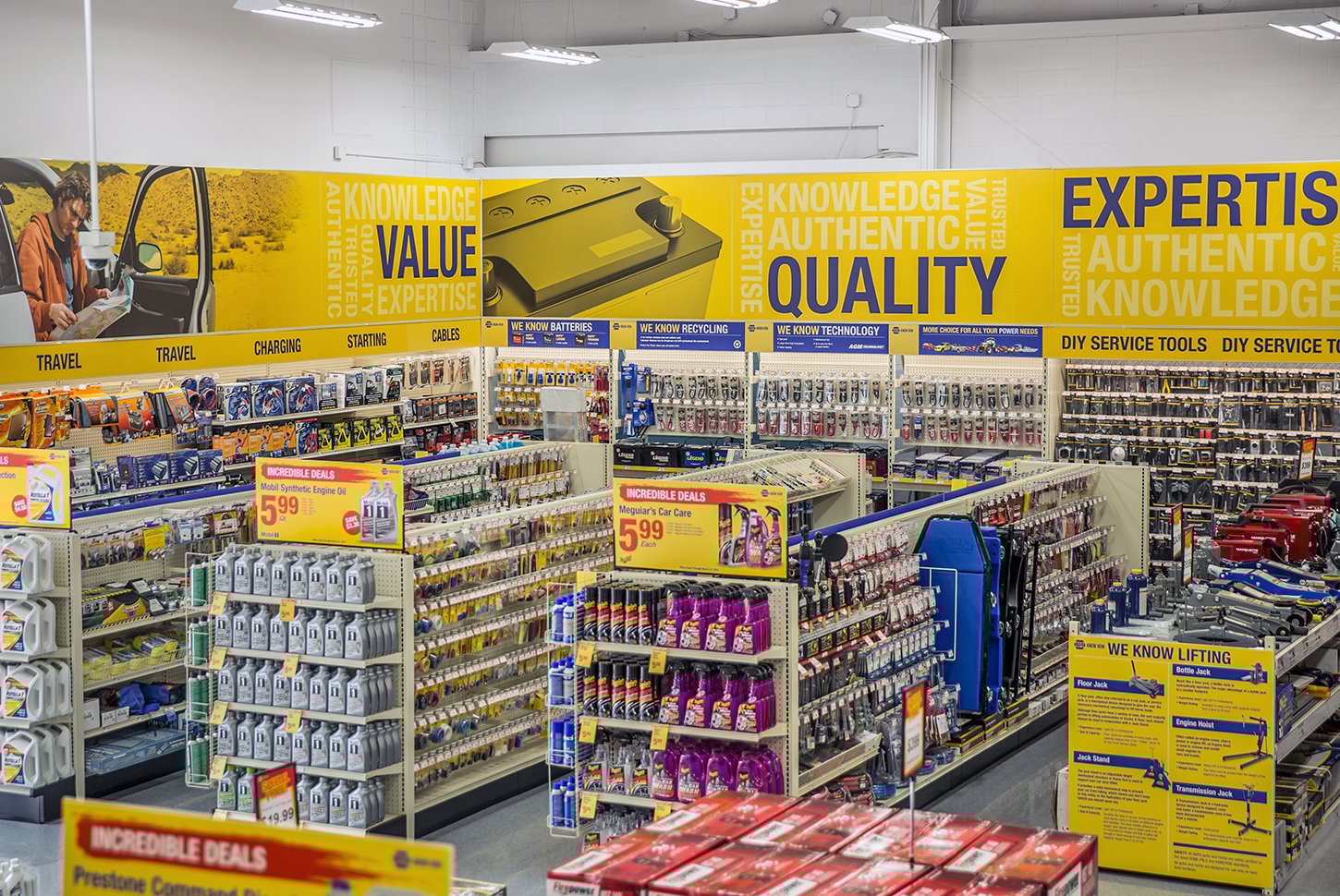
Miller Zell provided hardware solutions for NAPA Auto Parts that accommodated graphics packages and improved the efficiency of the installation process.
It feels good to translate a great retail design into a great store experience at scale. Precise design execution provides the best pathway to customer engagement and brand loyalty. Finishing on time and on budget and witnessing revenue growth becomes a win for you, your team and your organization.
Execution drives measurable impact. Consistent rollout, predictable budgets and disciplined field management directly influence conversion, customer experience and long-term ROI.
When strategy, creative, engineering, production and field execution work as one, the distance between idea and impact narrows, turning execution into a competitive advantage.