.png?width=170&height=44&name=MillerZell_Outline_Black_NO-Tagline_CLEAN-01%20(1).png "Miller Zell")















Bank mergers surged in late 2025, and in December stately business magazine The Economist celebrated the holiday cheer by noting that “Wall Street is drooling over bank mergers.”
We won’t dwell on the image, but suffice it to say that more than a few large regional banks are looking to expand their geographic footprints.
What we will dwell on is elevating bank brand strength during a post-acquisition rebrand. This isn’t just a straightforward brand refresh, with new signs and a fresh coat of paint. It’s about a customer-centric transformation, punctuated with an efficient rollout that builds brand equity, maintains continuity and minimizes disruption.
Let’s consider the ideal process and how to avoid mistakes that might damage your brand (legacy or new) and alienate your customer base (existing and potentially new).
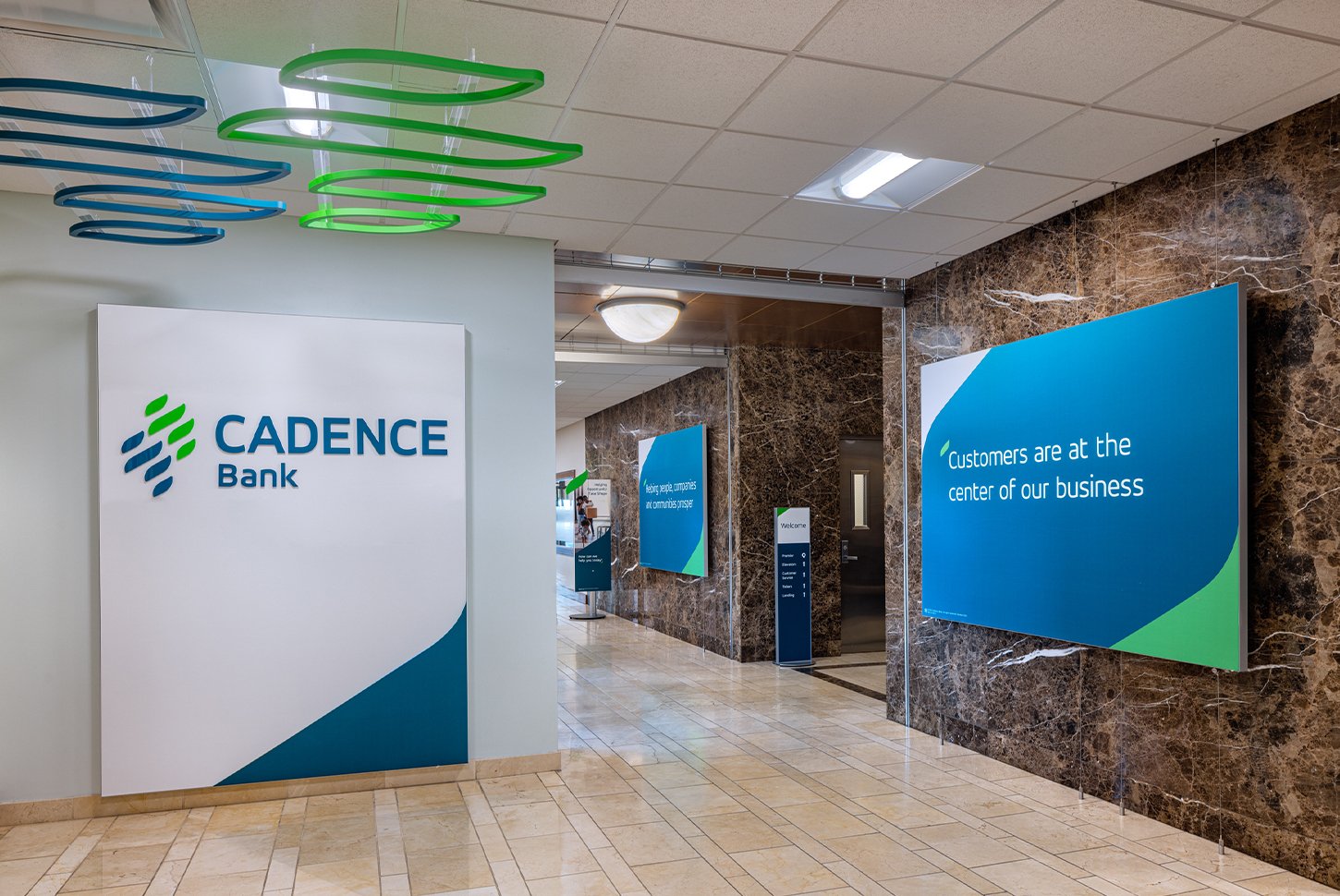
Rebranding that upgrades the customer experience: Cadence maximized its rebranding opportunity and upgraded every branch in its network. After partnering with Miller Zell, it now has a standardized program across 400+ branches that it can actively maintain through Miller Zell’s logistics software system.
What a successful rebrand requires
A merger gives banks a rare opportunity: a defined window to thoughtfully unify two brands into one stronger customer experience. But that opportunity only pays off if transformation is treated as a strategic investment, requiring creativity and informed pragmatism.
Rebranding across a large branch network is complex. It demands alignment across internal teams, physical environments and external execution.
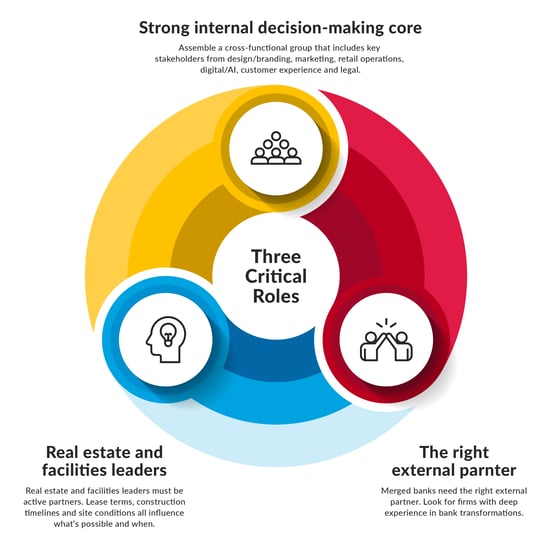
Three roles are critical.
First, banks need a strong internal decision-making core. Too many voices create confusion. Too few create blind spots. Assemble a cross-functional group that includes key stakeholders from design/branding, marketing, retail operations, digital/AI, customer experience and legal. This baseline group sets the tone, defines the priorities and centralizes the customer experience.
Second, real estate and facilities leaders must be active collaborators. A new brand cannot come to life if branches aren’t ready to receive it. Lease terms, construction timelines and site conditions all influence what’s possible and when. Without this expertise at the table, even the best brand strategy can stall.
Third, merged banks need the right external partner. Look for firms with deep experience in bank transformations, a record of successful rollouts and the project management infrastructure required to handle scale and complexity.
You’re looking for innovative problem solvers, logistical excellence and clear-eyed honesty about what it takes to deliver a rebrand with impact, elevating the customer experience while also being fiscally responsible. Your team should become collaborative partners, who know you and your brand and lean into extensive resources and experience to deliver your ideal results.
Integrate branding transformation into entire process
In banking, where stability and security matter deeply, poorly executed rebrands often lead to lost customer loyalty, especially those that underestimate customer impact.
The physical brand transformation is where your merger becomes visible and tangible to your customers. Whether you’re launching a new identity or uniting under an existing name, leadership must align early on how acquired assets, especially branches, will evolve.
Common problems to avoid include:
Thinking you can manage it like a refresh program: A rebrand is not superficial. Treating it like a refresh risks missing the foundational work required to integrate two brand cultures and deliver a consistent experience across the network.
Solution: Know that a rebrand touches everything: strategy, signage, compliance, technology/online platforms, associate behavior and customer trust. Engage and plan holistically and the endgame payoff will be substantial.
Designing for one branch: You’ve seen a beautiful design for a rebranded downtown branch? Great. What about your other 1,000 branches?
Solution: It’s a great design only if it includes a detailed plan for scaling across an entire branch network, regardless of region, branch format or footprint. An agile rebrand package includes a branding playbook and a flexible yet cohesive kit of parts that facilitates branch programming.
Having too many vendors: Managing multiple partners adds logistical complexity that can put a strain on internal resources to track fragmented work streams.
Solution: When you’re speaking with potential vendors, ask them about their program management capabilities. Many will change the subject, but know that finding an experienced partner accustomed to managing complex programs will serve as much-needed connective tissue, providing efficiency and desired results.
Over-reviewing and second guessing: Endless loops of feedback delay progress, increase costs and erode creative integrity.
Solution: Establish clear approval pathways and empower your team to make aligned, confident decisions that keep momentum going.
Failing to coordinate a unified communication plan: Internal and external communications should be aligned before, during and after brand rollout. If associates are unclear, customers will be too.
Solution: Build a plan that spans corporate, marketing, branch staff and digital touchpoints, so every audience hears a clear, consistent message about what’s changing and why.
Letting a phased approach derail meaningful change: Nothing wrong with planning for a phased execution. It’s often necessary and even useful. But phases that allow too much time to pass can reduce momentum, fuel second guessing and diminish or weaken the overall impact of the rebrand.
Solution: Organized leadership maintains momentum, while vendor partners looking for a long-term relationship instead of a one-off deal uphold commitments to deliver programs on time and on budget, no matter the unforeseen challenges.
Juggling opposing strategies: Mergers often bring together leadership with different visions, legacy standards and customer expectations. Attempting to honor all of them equally often leads to a diluted brand experience.
Solution: Make early strategic choices about positioning, tone and customer promise, and let those guide the execution. A strong brand needs clarity, not compromise.
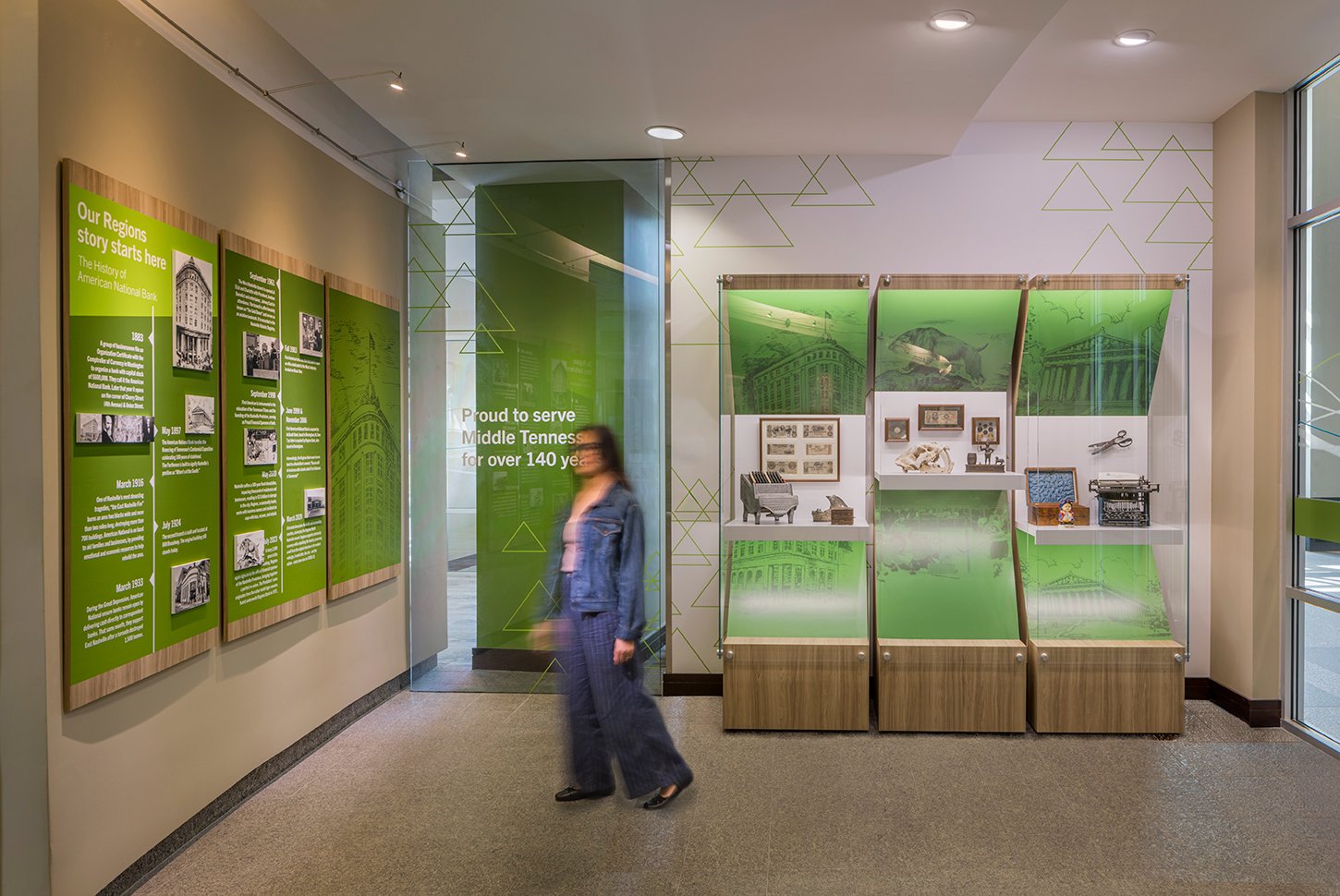
Lobby design: Miller Zell strategically designed and built a new display wall, which featured curated regional artifacts connecting Regions and Nashville. The items on display were matched with a purposefully edited timeline that was reimagined as a three-panel wall graphic.
Branch & digital rebranding that delivers value
Just like retailers, banks need to create a cohesive brand experience across all physical and digital channels. Security and ease of customer transition are paramount. Brand expression also should be the same online and offline. Information should be easily accessible through ITMs, digital signage, online and your app.
Your branches matter, as 34% of bank customers visit a branch at least once per month, according to Accenture. And your digital platforms must evolve and integrate with your physical environments in ways that make your customers confident and secure.
Customers experience your brand on an app or website just as they do inside your branches. After a merger, aligning legacy tech systems can be a challenging process, especially when integrating assets from smaller banks or credit unions with older infrastructures.
“Your branches matter, as 34% of bank customers visit a branch at least once per month, according to Accenture.”
The most straightforward path is to develop a multi-channel communication plan tailored to different customer segments. This should address common concerns around account access, service continuity and physical/digital banking functionality using language that reinforces financial stability, regulatory compliance and the benefits of the merger.
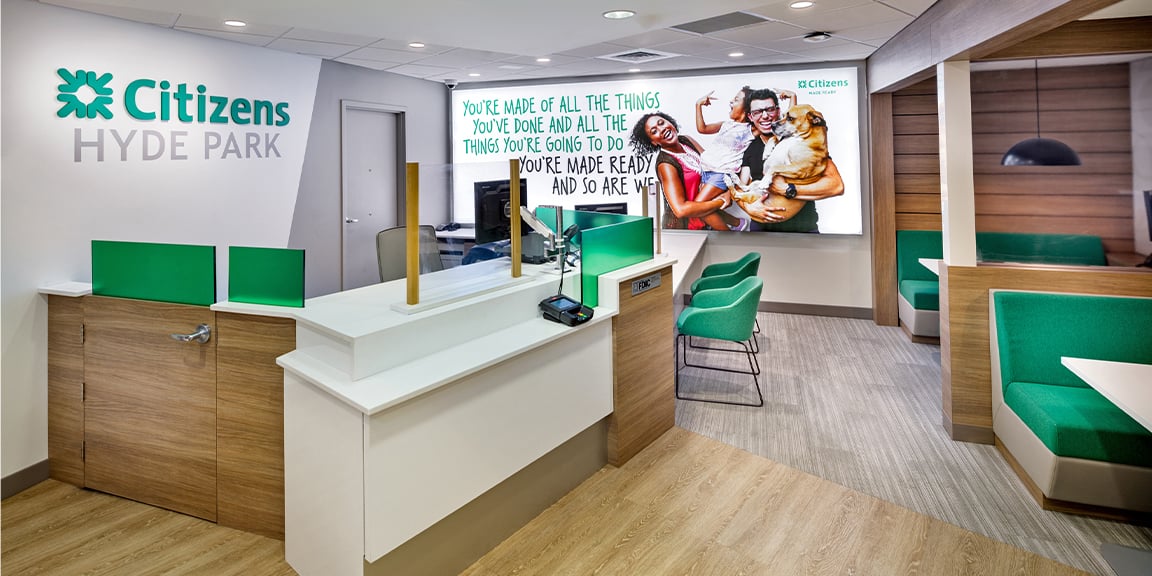
A brand beacon: Miller Zell designers saw the Citizens branch as a billboard opportunity that projects a strong brand impression and looks open and accessible even after staff hours, aided by high-impact graphics and continuous digital content.
Removing stress: Branding that builds customer connection
The most successful bank mergers begin vetting branding partners as soon as earnest negotiations begin.
The right partner brings more than execution. They bring confidence.
Confidence that hundreds of locations can be transformed within a 12-month window. Confidence that customer trust will be strengthened, not strained. And confidence that the new brand will feel intentional, unified and forward-moving from day one.
Because in a post-merger world, customers don’t experience strategy. They experience the brand.
Miller Zell is all about elevating brand experience. Let’s talk about yours.